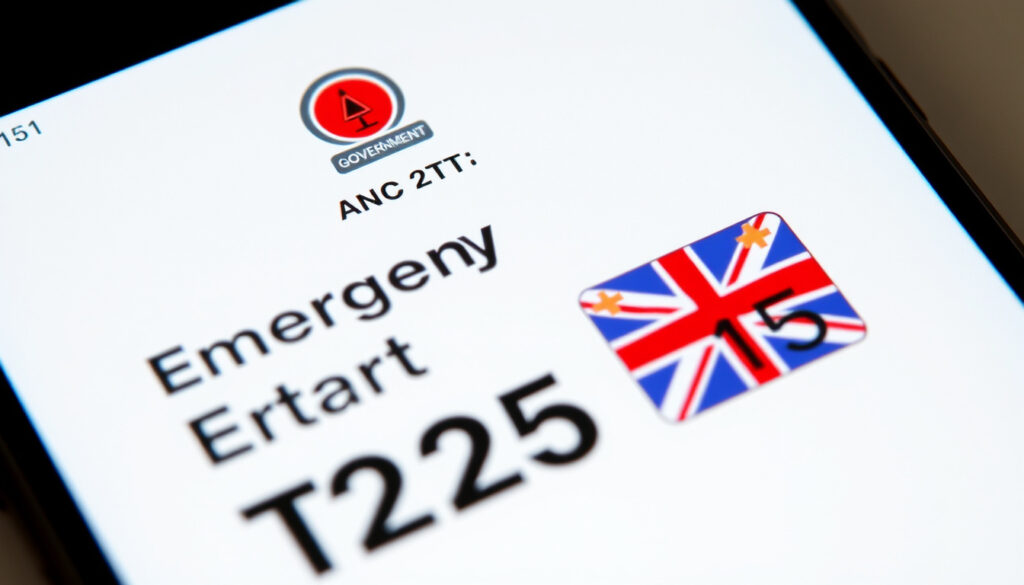
UK Emergency Alerts Operator Tests: 2025 Date & Details
If you own a mobile phone in the UK, keep it switched on and within earshot on the afternoon of 7 September 2025. The government is running its second nationwide test of the Emergency Alerts system, and this time it’s being led by mobile operators themselves. The last major test, back in April 2023, reached roughly 90% of compatible phones across the country.
Next test date: 7 September 2025 · Test time: 15:00 BST · Coverage: All UK mobile phones · Operators involved: All major UK networks · Previous test: April 2023
Quick snapshot
- Test on 7 Sept 2025 at 15:00 BST (GOV.UK Official Press Release)
- All operators broadcasting the test nationwide (Met Office Weather Agency)
- Five real alerts sent since the 2023 test during major storms (Prepare Campaign GOV.UK PDF)
- Exact message wording for the test (GOV.UK Official Press Release)
- When opt-out reopening will be announced after the test (Prepare Campaign GOV.UK PDF)
- Whether further national tests are scheduled beyond September 2025 (GOV.UK Official Press Release)
- Test announcement published 7 July 2025 (GOV.UK Official Press Release)
- Public awareness campaign now running (Met Office Weather Agency)
- Accessible materials published including Easy Read and BSL videos (GOV.UK Accessible Guidance)
- Test accompanies Resilience Action Plan publication (GOV.UK Official Press Release)
- Alert points to gov.uk/prepare for emergency preparation advice (Met Office Weather Agency)
- Regular testing to ensure system readiness for real emergencies (Prepare Campaign GOV.UK PDF)
The table below consolidates key specifications for the Emergency Alerts system, drawing from official government documentation and verified sources.
| Label | Value |
|---|---|
| System name | Emergency Alerts |
| Launch year | 2023 |
| Technology | Cell broadcast |
| Test frequency | As needed |
| Opt-out option | Available post-test |
| First national test | 23 April 2023 |
| Real alerts since 2023 | 5 |
| Compatible devices | iOS 14.5+, Android 11+ |
Why is the UK doing an emergency alert?
Purpose of the system
The Emergency Alerts system exists to warn people in the UK about life-threatening emergencies happening nearby. When dangerous situations arise — such as extreme weather events, flooding, or other serious threats to life — the system sends a direct message to mobile phones in the affected area. The government activated it five times between April 2023 and September 2025, all during major storm incidents.
The system uses cell broadcast technology, which means alerts are transmitted to all compatible devices connected to a specific cell tower simultaneously, rather than being sent individually to each phone number. This approach allows authorities to reach millions of people within seconds.
Cell broadcast operates independently of voice and data networks, meaning it can still reach phones even when regular mobile services are congested or overloaded during an emergency.
History of tests
The UK conducted its first local test in East Suffolk on 25 May 2021, followed by a Reading test on 29 June 2021. The first national test happened on 23 April 2023 at 3pm, reaching approximately 90% of compatible phones across the country. The upcoming September 2025 test marks the second national test and is operator-led, reflecting the government’s commitment to regular system checks.
The UK government will be testing the Emergency Alerts system on Sunday 7 September 2025 at 3pm.
— UK Government Official Statement (Prepare Campaign GOV.UK PDF)
The implication: regular operator-led testing demonstrates that the government treats this system as essential infrastructure for national emergency response.
What phones will receive Emergency Alerts?
Compatible devices
Most 4G and 5G capable mobile phones and tablets will receive the Emergency Alert during the test. The system works on devices running iOS 14.5 or later, and Android 11 or later. Older Android devices may still receive alerts if they have Wireless Alerts settings enabled. This broad compatibility means the vast majority of smartphones in use in the UK today are capable of receiving the signal.
The GOV.UK blog confirms that compatible devices will receive the alert regardless of whether they are connected to Wi-Fi at the time. The test is uniform across all UK nations with no regional opt-outs mentioned, meaning every corner of the country will be included.
Landlines, older feature phones without 4G/5G capability, and devices without compatible operating systems will not receive the alert. However, the system is designed to reach the large majority of mobile users.
Network requirements
All major UK network operators will transmit the test alert. This includes networks running 4G and 5G infrastructure across the country. The Met Office reports that operators nationwide will transmit the test, ensuring broad coverage regardless of which provider people use.
The pattern: nearly all UK mobile networks participate in the test, reflecting the system’s national scope and government backing.
How do emergency alerts work?
Alert delivery process
Cell broadcast technology powers the Emergency Alerts system. When an alert is triggered, the message is broadcast simultaneously to all devices within range of a cell tower. This differs from SMS messaging, which requires individual delivery to each phone number. The cell broadcast approach can reach thousands of devices almost instantly, making it ideal for emergency situations where speed is critical.
The system sends a message that includes clear instructions — in the case of the test, it will clearly state that no action is required. The alert points users to gov.uk/prepare for emergency preparation advice, helping people understand how to stay safe during real emergencies.
Sound and vibration
During the test, compatible phones will emit a loud siren-like sound and strong vibration for approximately 10 seconds, even if the device is set to silent or do not disturb mode. This is intentional — the government wants to ensure people notice real alerts even when they might otherwise miss a notification.
The alert overrides your phone’s silent and do not disturb settings, forcing sound and vibration. This ensures life-threatening alerts cut through regardless of how your phone is configured.
The catch: even with this override capability, phones that are switched off or out of network range cannot receive alerts.
When is the next emergency alert test UK?
Upcoming test details
The UK government scheduled the second nationwide test for Sunday 7 September 2025 at 15:00 BST. The test announcement was published on 7 July 2025, followed by a public awareness campaign running ahead of the test date. Local authorities, including Warwick District Council, have been relaying the information to their communities since early September.
The test accompanies the publication of a Resilience Action Plan, signaling that the government is treating regular testing as part of broader national preparedness efforts. Accessible materials including Easy Read guides and British Sign Language videos are available for the test, ensuring the information reaches people with different access needs.
Previous tests
The first national test occurred on 23 April 2023 at 3pm. Before that, the government conducted two local tests — in East Suffolk on 25 May 2021 and Reading on 29 June 2021 — to refine the system before the nationwide rollout. Since the 2023 national test, five real alerts have been sent during major storm events, demonstrating that the system has been operational and used when genuinely needed.
No further national tests beyond 7 September 2025 have been announced in available sources, though the government has committed to regular testing to ensure system functionality and public familiarity with the alerts.
What this means: the government signals ongoing commitment to testing, but specific future test dates remain undetermined.
Will you hear the emergency alert if your phone is on silent?
Silent and Do Not Disturb
Yes. The Emergency Alert is designed to override your phone’s silent mode and Do Not Disturb settings. When an alert is sent, it forces your phone to emit the loud siren sound and strong vibration regardless of how you have configured your device. This is a deliberate safety feature — in a life-threatening emergency, you need to notice the alert even if you have silenced your phone.
The government emphasizes that users can opt out of Emergency Alerts, including tests, but strongly advises keeping them enabled for safety. The test message will clearly state it is a test with no action required from the public, so there is no need to be alarmed when it sounds.
Phone off scenarios
If your phone is powered off, you will not receive the Emergency Alert. The system can only reach devices that are switched on and connected to a cellular network. This is why authorities recommend keeping mobile phones charged and switched on during severe weather events or other emergency situations.
Phones that are switched off, out of network range, or not compatible with the system will not receive alerts. Authorities cannot guarantee reach to every single device, which is why the government also uses television, radio, and other channels to broadcast emergency information.
The implication: while the system reaches most devices, complementary broadcast channels remain essential for comprehensive emergency coverage.
Timeline
Five milestones trace the development of UK Emergency Alerts from early local trials to the second nationwide test in 2025.
| Date | Event |
|---|---|
| 25 May 2021 | Local test in East Suffolk |
| 29 June 2021 | Local test in Reading |
| 23 April 2023 | First national test at 3pm |
| 7 September 2025 | Press release for second test published |
| 7 September 2025 | Second national test at 15:00 BST |
Clarity on what we know and what we don’t
Confirmed
- Test on 7 September 2025 at 15:00 BST
- All operators broadcasting nationwide
- Five real alerts sent since 2023
- Alert duration approximately 10 seconds
- Cell broadcast technology used
Unclear
- Exact message wording for the test
- When opt-out reopening will be announced
- Whether further tests are scheduled beyond September 2025
- Specific success metrics from the 2023 test
What authorities say
It’s important to test the Emergency Alerts system regularly to make sure it works effectively in real emergencies.
— Met Office Government Weather Agency (Met Office Official Statement)
Regular testing ensures the system is functioning correctly, should it need to be used in a life-threatening emergency.
— Prepare Campaign GOV.UK Initiative (Prepare Campaign Official Guidance)
Related reading: 2025 UK Bank Holidays – Full List, Dates & Regional Differences
educationhub.blog.gov.uk, warwickdc.gov.uk, essentialstudentliving.com, en.wikipedia.org
With systems already proving effective through recent Met Office heatwave alerts this summer, the 7 September operator tests will fine-tune delivery to phones in silent mode.
Frequently asked questions
Does the UK have a nuclear warning system?
The UK Emergency Alerts system is designed for a range of life-threatening emergencies, including extreme weather, flooding, and other serious threats. While it can be used for various emergency scenarios, it is not specifically a nuclear warning system. The government uses multiple communication channels for different types of emergencies.
What does the Emergency Alert sound like?
The Emergency Alert produces a loud siren-like sound and strong vibration that lasts approximately 10 seconds. This distinctive alert is designed to grab attention even if your phone is in your pocket or across the room. The government deliberately chose a sound that is difficult to ignore.
Will the emergency alert work when the phone is off?
No. If your phone is powered off, it cannot receive the Emergency Alert. The system requires devices to be switched on and connected to a cellular network. This is why authorities recommend keeping phones charged and on during severe weather events or other emergencies.
Can I opt out of UK emergency alerts?
Yes, you can disable Emergency Alerts in your phone settings, including opting out of test alerts. However, the government strongly advises keeping them enabled for safety. If you opt out, you may miss genuine emergency alerts that could save your life. The opt-out reopening timeline after the September 2025 test remains unclear in available sources.
Is there an emergency alert test today?
Check the date. The next scheduled test is on 7 September 2025 at 15:00 BST. If you are reading this after that date, you can check for announcements on GOV.UK or your local council’s website. Real alerts are sent only during actual life-threatening emergencies.
What happened during the 2023 Emergency Alerts test?
The first national test occurred on 23 April 2023 at 3pm. Approximately 90% of compatible phones were expected to receive that test. The government considers that test successful and has since used the system five times for real emergencies, primarily during major storms.
For mobile phone owners across the UK, the practical takeaway is straightforward: keep your phone switched on and charged on the afternoon of 7 September 2025, and do not be alarmed when the siren sounds. The test is part of ongoing efforts to ensure the system works when it matters most. If you have accessibility needs, GOV.UK provides Easy Read guides and British Sign Language videos to help you understand what to expect. Residents who miss the test will still receive genuine emergency alerts if real threats arise, as authorities have activated the system five times since 2023 during major storm events.
More related posts
 DNA Test Ireland: Cost, Accuracy & Legal Guide
 Becky Hill: Singer and Court Clerk – Two Identities Explained
 Sony WF-C700N – ANC Earbuds Specs and Performance Guide
 Gatwick Parking Promo Code 2026: PROMO26 + 70% Off Deals
 Manchester United Ruben Amorim – Record, Tenure and Exit
 M&S Cushions: Quality, Trends, and How to Style Your Sofa
 Ministry of Justice Jobs: How to Apply, Login & Find Vacancies
 What 3 Words App – Free Download, Uses and Safety Guide