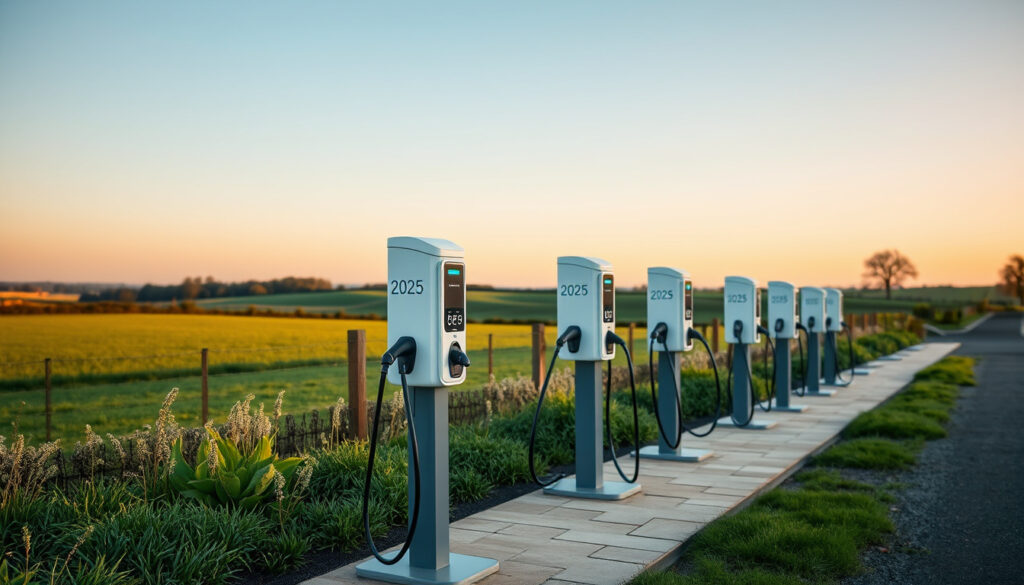
EV Chargers England Regulation Change 2025: Rules Explained
If you’ve been putting off a home charger because the paperwork felt overwhelming, May 2025 brought a welcome change. England has scrapped the planning permission requirement for most EV charger installations at homes and workplaces.
Regulation effective: May 2025 · Planning permission: Removed for homes and workplaces · Public chargers mandate: 8kW+ from Nov 2024 · Prior changes: 2022 and 2023 updates
Quick snapshot
- Planning permission removed from May 29, 2025 (UK Government consultation)
- Most installations qualify under permitted development rights (Planning Portal)
- Which local authorities have active Article 4 directions affecting EV charger PDRs
- Exact implementation timeline for cross-pavement gullies as permitted development
- May 29, 2025: Main change took effect (4D Planning)
- Cross-pavement gullies expected as PDR by end of 2025 (The Times)
- April 2026: Public charger access rules enforced (Planning Resource)
- Further PDR relaxations promised for 2025 (Planning Resource)
| Key fact | Detail |
|---|---|
| Effective date | May 29, 2025 |
| Planning rule change | Removed for EV chargers under PDR |
| Public charger threshold | 8kW and above |
| Grant eligibility | Zero emission vehicles grant available |
| Class D outlet casing limit | 0.2 cubic metres max |
| Class E upstand height | 2.7m general, 1.6m near dwellings |
| Equipment housing limit | 29 cubic metres, 3m height |
| Average cost saving | £1,100 per installation |
The table below illustrates how the 2025 changes compare to the previous regulatory landscape.
| Aspect | Before May 2025 | After May 29, 2025 |
|---|---|---|
| Planning permission | Often required with £200–500 fees plus 4–8 week delays | Permitted development rights apply for most installations, saving around £1,100 |
| Home charging cost | Variable tariffs | As low as 8p/kWh off-peak vs 72p/kWh public average |
| Class E upstand height | Restricted | 2.7m general, 1.6m within 10m of dwellinghouse |
Do you need permission to install an EV charger?
For most homeowners and businesses in England, the answer shifted dramatically in 2025. The Town and Country Planning (General Permitted Development) (England) (Amendment) Order 2025 removed the need for planning permission on EV charger installations from May 29, 2025. This applies to homes, workplaces, and commercial properties alike.
The change works through permitted development rights (PDRs), which allow certain building works to proceed without a full planning application. PDRs streamline the process for infrastructure that government has deemed suitable for fast-track approval. EV chargers fall under this umbrella because the technical standards already built into Building Regulations provide sufficient safeguards.
Homes and driveways
For domestic installations, two classes of PDR cover most scenarios. Class D handles wall-mounted charging outlets, where the casing must not exceed 0.2 cubic metres in volume. Class E covers free-standing upstands with the charging equipment above ground level.
Class E installations have specific limits. General installations can reach 2.7 metres in height, but anything within 10 metres of a dwellinghouse must stay at or below 1.6 metres. Only one upstand per parking space is permitted, and the land must be reverted if the charger is discontinued.
For homeowners without off-street parking, the rules create a practical distinction: a wall-mounted unit inside your property boundary often qualifies for PDR, while a cable crossing the pavement to an on-street vehicle requires additional permissions. Understanding this boundary matters when evaluating your installation options.
Workplaces and businesses
Commercial properties received equally significant relief. Non-domestic chargepoints generally do not require planning applications except for large-scale developments, according to the UK Government consultation. The May 2025 amendments also introduced equipment housing allowances for larger chargepoints in off-street car parks.
Equipment housing must not exceed 29 cubic metres in volume or 3 metres in height measured from the parking surface. It must sit within 5 metres of a highway and within 10 metres of a dwellinghouse curtilage. Multiple housing units are now permitted for non-domestic installations.
Article 4 directions may remove PDRs in some conservation areas, and local planning authorities can impose these restrictions. Before installing, check with your local authority if your property sits in a conservation area or National Landscape. This single verification step prevents discovering your installation requires retrospective permission.
What are the key EV chargers England regulation changes?
The May 2025 amendments to Permitted Development Rights under Class E, Part 2 of Schedule 2 introduced several targeted changes beyond the headline planning permission removal. Highway distance restrictions that previously limited where chargers could be placed have been eliminated. Taller upstands are now permitted, accommodating faster charging equipment that requires more robust above-ground infrastructure.
Equipment housing for larger chargepoints in non-domestic off-street car parks received explicit PDR treatment for the first time. The government framed these changes around a specific goal: removing barriers to the timely and affordable installation of reliable charging infrastructure.
The Department for Transport and the Office for Zero Emission Vehicles (OZEV) jointly confirmed the planning permission removal on May 29, 2025. This followed a consultation process that included a government call for evidence launched in June, prior to formalizing the changes.
2025 permitted development rights update
The Town and Country Planning (General Permitted Development) (England) (Amendment) Order 2025 forms the legal instrument behind these changes. It amends the base 2015 Order to incorporate EV chargers and heat pumps into streamlined approval pathways. The reforms support the UK’s net-zero goals by reducing bureaucratic barriers to green technology deployment.
Prior 2022-2023 shifts
The current 2025 changes build on earlier expansions to permitted development rights for EV charging that began in 2022. Those initial modifications introduced basic PDR coverage for home chargers, but size restrictions and conservation area complications created ongoing barriers. The 2023 consultations refined understanding of where problems remained, leading to the comprehensive 2025 package.
What are UK driveway EV charger rules?
The rules distinguish between what happens on your property and what crosses public space. Driveway installations on your own land fall under PDR if they meet the size and placement criteria. No planning application is required when the outlet casing stays under 0.2 cubic metres (wall-mounted) or the upstand respects the height limits and sits within the curtilage of your dwellinghouse.
What the regulations do not change matters equally. Listed buildings still require listed building consent regardless of PDR status. The Distribution Network Operator (DNO) must still approve the connection in most cases. Building Regulations Part P compliance remains mandatory for the electrical work, ensuring safety standards are met by qualified installers.
Installation requirements
Professional installation by a certified electrician satisfies both the DNO approval process and Building Regulations Part P requirements. These certifications provide the documentation that your installation meets technical standards, even though planning permission is no longer needed.
For those uncertain whether their installation qualifies under PDR, a lawful development certificate application provides definitive confirmation before work begins. This optional step costs around £100 but eliminates any ambiguity about compliance.
Safety and compliance
PDRs do not apply in the curtilage of listed buildings or scheduled monuments, regardless of how the equipment is sized. This exclusion protects heritage assets from alterations that might affect their character or integrity. Conservation areas present a more nuanced situation where PDRs apply but Article 4 directions may have removed them in specific localities.
If your property sits in a conservation area, national park, or National Landscape, verify the current Article 4 status with your Local Planning Authority before proceeding. The planning portal provides guidance, but local variations mean individual verification remains necessary.
How do new rules affect public EV chargers?
Public charging infrastructure follows a parallel but distinct regulatory track. From November 2024, chargepoints rated at 8kW and above must incorporate smart charging capability. This means the equipment can communicate with the grid to balance demand and optimize charging times, reducing strain on electricity networks during peak periods.
Home charging economics remain dramatically different from public alternatives. Home tariffs can reach as low as 8p/kWh compared to a public average of 72p/kWh. This roughly 9:1 cost ratio explains why home charging represents the most economical choice for EV owners who have off-street parking available.
Power rating mandates
The smart charging mandate applies to public infrastructure above the 8kW threshold. This covers the majority of destination chargers at supermarkets, shopping centres, and other public venues. Slower chargepoints below this rating operate under different requirements, though all public chargepoints must meet accessibility standards that come into force in April 2026.
Business cost savings
For businesses installing multiple chargepoints, the 2025 PDR changes create meaningful savings. Avoiding planning applications for each unit across a car park eliminates application fees that can reach £200-500 per unit. The combined savings for commercial installations can reach thousands of pounds depending on the number of spaces.
The regulatory simplification removes a barrier but does not eliminate all costs. Cross-pavement solutions for on-street charging involve engineering complexity, requiring Section 178 Highways Act permissions from local authorities. These solutions remain technically feasible but add layers of process and expense that may not suit all property types.
What steps to install an EV charger post-regulation change?
With planning permission removed, the practical installation path now follows these stages. First, verify your property status by checking whether your location sits in a conservation area or affects a listed building or scheduled monument. If heritage restrictions do not apply, permitted development rights cover most scenarios.
Home setup process
For a standard home installation, engage a qualified installer registered with a competent person scheme such as NICEIC or NAPIT. The installer handles the DNO notification and ensures Part P compliance. Typical installation takes a single day once the unit and available appointment slot are confirmed.
Select your charger based on your vehicle’s requirements and your household’s charging patterns. Smart chargers with scheduled charging features can automatically charge during off-peak hours when electricity tariffs are lower. Most new EVs sold in the UK support smart charging through protocols like OCPP.
Grants and eligibility
The Zero Emission Vehicle grant provides up to £375 towards the cost of a wallbox for eligible vehicles. This grant applies to the charger purchase and installation, not the vehicle itself. Eligibility depends on the vehicle being a new EV purchased from a UK dealership meeting current grant criteria.
Existing EV owners with older vehicles may not qualify for the current vehicle grant but can still claim the wallbox grant if their purchase meets eligibility requirements. The grant reduces but does not eliminate installation costs, making the removed planning permission a meaningful additional saving on top of the incentive.
Timeline of changes
The following timeline tracks the key regulatory milestones for EV charger permitted development rights in England.
| Date | Event |
|---|---|
| 2022 | Initial EV charger permitted development rights expansion |
| June | Government call for evidence on regulation changes |
| November 2024 | Public chargepoints 8kW+ require smart charging capability |
| May 29, 2025 | Planning permission removed for EV charger installations in England |
| End of 2025 | Cross-pavement gullies expected as permitted development |
| April 2026 | Public charger access rules enforced |
Confirmed facts and open questions
Confirmed
- Planning permission removal confirmed for May 29, 2025 by DfT and OZEV
- Class D and Class E PDR specifications from the Planning Portal
- Equipment housing limits of 29 cubic metres and 3m height
- Listed buildings and scheduled monuments excluded from PDRs
- Average savings of £1,100 per installation
Unclear
- Specific Article 4 directions active in each local authority area
- Exact implementation date for cross-pavement gullies as PDR
- Whether future grants will extend beyond current vehicle eligibility
- Quantitative uptake data following the May 2025 changes
What the experts say
These changes aim to remove barriers to the timely and affordable installation of reliable charging infrastructure.
— UK Government consultation document
A planning application is not required for the installation of the majority of non-domestic chargepoints.
— UK Government, Department for Levelling Up, Housing and Communities
This saves homeowners an average of £1,100 in planning application fees and weeks of waiting time.
— Tesla Charger UK, EV installer blog
Summary
For property owners in England, the May 29, 2025 change removes the planning application step that previously added cost and delay to EV charger installation. Permitted development rights now cover the majority of home, workplace, and commercial installations, subject to size limits for the equipment itself and exclusions for heritage sites. The practical path forward involves confirming your property status, engaging a qualified installer, and claiming the available grant where eligible. For those without driveways, cross-pavement solutions offer an alternative but involve additional complexity and expense that may outweigh the benefits for many households.
Related reading: Used Tesla Model 3 UK · Kwik Fit Near Me
Most home and workplace EV chargers in England now bypass planning permission from May 29 2025, as Evening Ledger’s regulation guide details alongside exceptions and grants.
Frequently asked questions
Do I need planning permission to install an EV charger in England?
From May 29, 2025, planning permission is not required for most EV charger installations under permitted development rights. Exceptions include properties in the curtilage of listed buildings or scheduled monuments, and properties affected by Article 4 directions in some conservation areas.
What are the size limits for EV charger permitted development?
Wall-mounted units under Class D must have casings not exceeding 0.2 cubic metres. Free-standing upstands under Class E must not exceed 2.7 metres in height, or 1.6 metres if within 10 metres of a dwellinghouse. Equipment housing for larger non-domestic chargepoints is limited to 29 cubic metres and 3 metres in height.
Can I charge my EV from a standard wall socket safely?
Using a standard 13A socket is possible but slow, delivering roughly 10 miles of range per hour. For regular home charging, a dedicated smart charger offers faster delivery, scheduled charging for off-peak tariffs, and compliance with safety standards. Emergency occasional charging from a standard socket is acceptable but not suitable as a primary method.
How do the new rules affect listed buildings?
Listed buildings remain subject to listed building consent requirements regardless of permitted development rights status. If your property is listed or within the curtilage of a listed building, you must obtain consent before installing an EV charger, even with the 2025 regulatory changes.
What grants are available for EV charger installation?
The Zero Emission Vehicle grant provides up to £375 towards a wallbox installation for eligible new EVs purchased in the UK. The grant covers part of the charger and installation cost, complementing the savings from eliminated planning fees following the May 2025 regulatory change.
Can I install an EV charger without a driveway?
Properties without off-street parking face additional complexity. Cross-pavement solutions exist but require permission under Section 178 of the Highways Act 1980 from your local highway authority. These solutions involve engineering work and costs that may be substantial. The option exists but requires more planning than properties with available private parking.
What happens to public EV charger rules in 2026?
From April 2026, public chargepoint operators must meet new access requirements ensuring chargers are available and functional. Combined with the November 2024 smart charging mandate for units rated 8kW and above, these regulations aim to improve reliability and accessibility of public charging infrastructure across England.
More related posts
 Hey Dudes: Controversy, Foot Health & Ownership Facts
 Mark Knopfler: Net Worth, Today, and Clapton’s View
 Car Garage Near Me – UK Guide to MOT, Repairs & Dealers
 How to Pay Stansted Drop Off: Fees, Penalties & Grace Period
 Man City vs Exeter City Lineups – Confirmed Teams, 10-1 Result
 Ian Wright Net Worth 2025: How Rich Is the Arsenal Icon?
 Vax Carpet Cleaner Solution – Reviews, Prices and Usage Guide
 BBC Weather Bury St Edmunds: 14-Day Forecast & Temperature