Flea Bites: How to Identify, Treat, and Prevent Them
Few things are as maddening as an itch you can’t explain — especially when tiny red bumps appear on your ankles and the scratching keeps you up at night. Chances are, you’re dealing with flea bites, a common nuisance that affects both people and pets. This guide will help you identify those bites, treat the itch, and finally rid your home of the pests responsible.
Typical onset: Within 30 minutes of bite ·
Common appearance: Small red bumps, often in clusters ·
Itch intensity: Extremely itchy ·
Location preference: Ankles, legs, and waist
Quick snapshot
- Fleas bite humans and cause itchy red bumps (Cleveland Clinic)
- Antihistamines and calamine lotion relieve symptoms (AAFA)
- Vacuuming reduces flea eggs and larvae (NHS)
- Effectiveness of specific home remedies like essential oils (StatPearls)
- Exact duration of a flea infestation without treatment (StatPearls)
- Whether oral steroids are needed for severe swelling (StatPearls)
- Itching begins within 30 minutes of the bite (Cleveland Clinic)
- Red bumps can last up to 1–2 weeks without treatment (Cleveland Clinic)
- Flea lifecycle: eggs hatch in 2–12 days (NHS)
Six key facts about flea bites, drawn from medical guidelines, show a consistent pattern: early identification and simple home care resolve most cases.
| Fact | Detail | Source |
|---|---|---|
| Typical onset | Within 30 minutes of bite | Cleveland Clinic |
| Common appearance | Small red bumps, often in clusters | Cleveland Clinic |
| Itch intensity | Extremely itchy | StatPearls |
| Location preference | Ankles, legs, and waist | AAFA |
| Treatment options | Calamine lotion, antihistamines, cold compress | NHS |
| Duration of bites | 1–2 weeks; seek medical help if infected | Cleveland Clinic |
How do I know if my bites are from fleas?
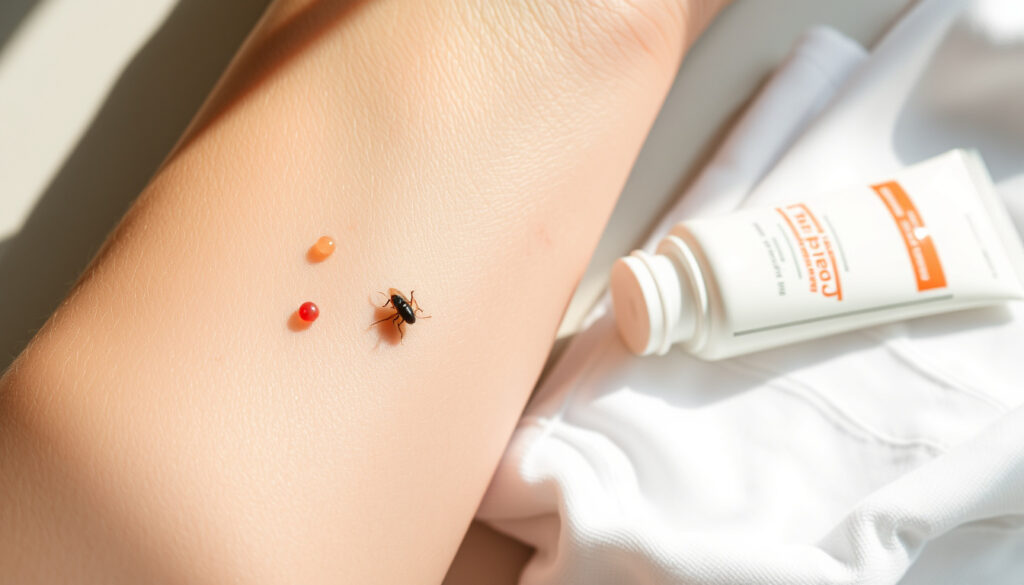
What do flea bites look like?
- Flea bites appear as small red bumps often in clusters — a pattern confirmed by Cleveland Clinic.
- Intense itching occurs within 30 minutes, per StatPearls.
- Common locations are ankles and legs, according to AAFA.
What are the symptoms of flea bites?
- Redness and localized swelling at the bite site (StatPearls)
- Intense pruritus (itching) that can disrupt sleep
- Possible secondary infection if scratched excessively (AAFA)
The pattern is clear: flea bites cluster on exposed legs and ankles, itch intensely within half an hour, and can linger for days. Differentiating them from other insect bites early prevents delayed treatment.
What can be mistaken for flea bites?
How to tell flea bites from bed bug bites?
Three key differences: location, pattern, and timing separate flea bites from bed bug bites.
| Feature | Flea Bites | Bed Bug Bites |
|---|---|---|
| Common location | Ankles and legs (Cleveland Clinic) | Face, neck, arms, hands (NHS) |
| Pattern | Random clusters (AAFA) | Line or zigzag (NHS) |
| Onset of itch | Within 30 minutes (Cleveland Clinic) | Delayed – can be hours (NHS) |
The implication: misidentifying bites leads to wrong treatment. If you see a line of bites on your arm, bed bugs are likely; scattered bites on your ankles point to fleas.
How can I treat flea bites?
What clears up flea bites fast?
Most flea bites resolve with over-the-counter care — no prescription needed. The real risk is scratching, which opens the door to infection.
- Wash the area with soap and water to reduce irritation (AAFA).
- Apply calamine lotion or a topical antihistamine cream (StatPearls).
- Use a cold compress (ice pack wrapped in cloth) for 10–20 minutes to reduce swelling (NHS).
- Take an oral antihistamine like cetirizine or loratadine for severe itching (StatPearls).
- Avoid scratching; cover broken skin with a bandage after cleaning (Cleveland Clinic).
- Seek medical help if signs of infection appear (redness spreading, warmth, pus).
The trade‑off: fast relief is easy, but preventing re‑bites means tackling the infestation at its source — your home and pets.
Can fleas live in my bed?
Do fleas live in bed sheets?
- Adult fleas can live in bedding, carpets, and furniture, according to NHS guidance on flea habitats.
- Vacuuming daily helps remove up to 96% of flea eggs and larvae (StatPearls).
- Wash bedding in hot water (at least 130°F / 54°C) to kill fleas and eggs.
What kills fleas instantly on bed?
- Insecticides containing permethrin can kill adult fleas on contact (NHS).
- Diatomaceous earth (food grade) can be sprinkled on mattresses — but avoid inhaling.
- Steam cleaning at high temperature kills fleas at all life stages.
The implication: fleas in your bed means eggs in the mattress — just washing sheets won’t break the cycle. Combining vacuuming, heat treatment, and insecticides is the only reliable strategy.
Will vacuuming every day get rid of fleas?
What kills fleas instantly on bed?
- Vacuuming removes up to 96% of flea eggs and larvae from carpets and upholstery (StatPearls).
- Combined with chemical treatments, vacuuming can break the flea lifecycle within 2–3 weeks.
- Need to treat pets simultaneously — fleas prefer animal hosts, and untreated pets re‑infest the home.
Vacuuming alone won’t kill adult fleas — it removes eggs and larvae. Adult fleas need direct treatment (insecticide or heat) to die. Consistency is everything: skip a day and the cycle resets.
The catch for pet owners: you can vacuum every day and still have fleas if your dog or cat isn’t on a vet‑approved preventive. The parasite uses the animal as a mobile nursery.
What’s confirmed vs. what’s still unclear
Confirmed facts
- Fleas bite humans and cause itchy red bumps (Cleveland Clinic)
- Antihistamines and calamine lotion relieve symptoms (AAFA)
- Vacuuming reduces flea eggs and larvae (NHS)
What’s unclear
- Effectiveness of specific home remedies like essential oils (AAFA)
- Exact duration of a flea infestation without treatment
- Whether oral steroids are routinely needed for severe swelling (StatPearls)
“Flea bites are small, discolored bumps on your skin.”
— Cleveland Clinic
“A red, swollen weal develops within half an hour of the bite.”
— NHS
“Most bed bug and flea bites need only supportive care with over‑the‑counter medicine.”
— AAFA
For anyone dealing with flea bites, the path to relief is clear: identify the bites early, treat the itch with proven methods, and break the flea lifecycle at home. Ignoring the pests means more bites — and more sleepless nights. For pet owners, the choice is stark: treat your dog or cat simultaneously with a veterinary‑approved flea preventive, or watch the infestation return week after week.
If you’re also dealing with other skin reactions, see our guide on Red Blotches on Skin: Causes, When to Worry, and Pictures. And if your pet has been stung, Dog Stung by Bee: First Aid Steps & Emergency Signs has you covered.
healthline.com, goodrx.com, nhs.uk, www2.hse.ie, medicalnewstoday.com, betterhealth.vic.gov.au, mosquitosquad.com, medicalnewstoday.com
Frequently asked questions
Can flea bites spread to other parts of the body?
Flea bites themselves don’t spread, but scratching can transfer bacteria and cause secondary infections in new areas.
How long do flea bites last?
Typically 1–2 weeks. With proper care (calamine, antihistamines) they often resolve in 3–7 days.
Are flea bites contagious between people?
No. Flea bites are a reaction to insect saliva; they are not transmitted person-to-person. Fleas themselves can move from one person to another if they are in close contact.
Can flea bites cause allergic reactions?
Yes. Some people develop a hypersensitivity reaction with intense swelling and itching. In rare cases, severe systemic symptoms (chest pain, nausea, sweating) require emergency care (AAFA).
What is the best home remedy for flea bites?
Cold compress, calamine lotion, and oral antihistamines. Avoid scratching. For natural options, a paste of baking soda and water may soothe itching.
Do fleas bite through clothing?
Fleas can bite through very thin fabric but prefer bare skin. They typically target exposed areas like ankles and legs.
Can flea bites lead to infection?
Yes. Secondary bacterial infection from scratching is common. Signs include increasing redness, warmth, pain, and pus. Seek medical attention if these occur (Cleveland Clinic).
How do I prevent fleas from biting me?
Use insect repellent containing DEET on exposed skin, wear long pants and socks, treat pets with flea preventives, and keep your home clean (vacuum daily, wash bedding in hot water).
More related posts
 Animal Crossing New Horizons – 2025 Guide and Overview
 Gujarat Titans vs Lucknow Super Giants Match Scorecard – Head-to-Head Records & Stats
 All Creatures Great and Small Episodes: Season 7 Status & Cast
 Matt Czuchry: Personal Life, Career & Facts (2024)
 Real Sociedad vs Man United – Controversial 4-1 Exit at Old Trafford
 Are You There God It’s Me Margaret – Book Summary, Movie and Facts