What Is Doner Meat – Composition, Origins and Health Facts
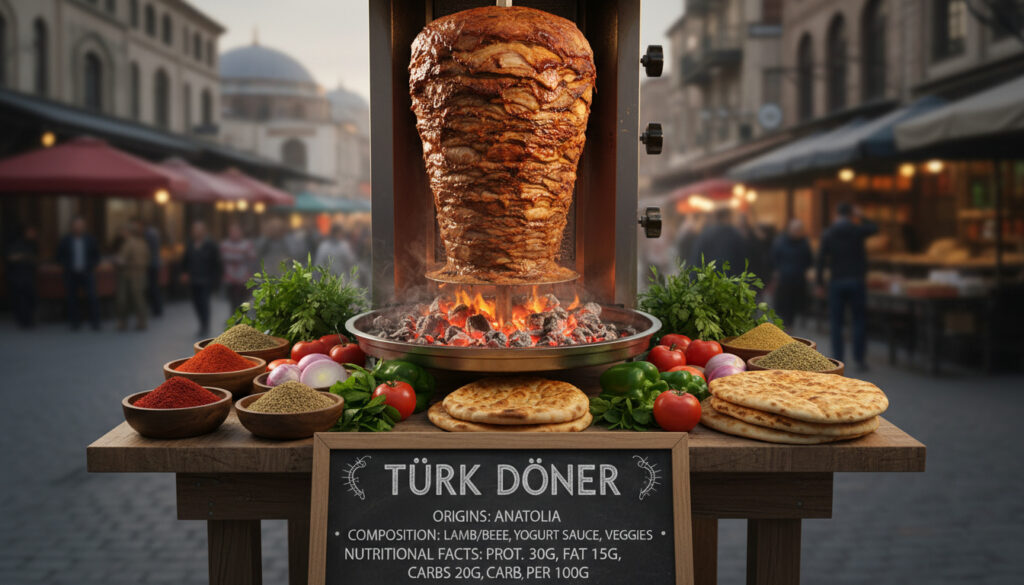
Doner meat serves as the foundation of döner kebab, a globally distributed street food featuring seasoned meat cooked on a vertical rotisserie. The preparation involves stacking thin layers of ground lamb, beef, or blended proteins into an inverted cone shape, then slowly rotating the assembly against a heat source to create caramelized exterior surfaces while maintaining moist interiors.
Despite its ubiquity in European cities from Berlin to London, confusion persists regarding the exact composition and preparation standards of this Ottoman-origin dish. While traditional Turkish establishments maintain specific recipes using premium cuts, mass-market adaptations vary significantly in meat quality, spice profiles, and nutritional value.
According to Headbangers Kitchen, authentic preparations ground the meat fresh, incorporating 15-20% fat content alongside binders such as yogurt and onion to achieve the dense, sliceable texture essential for vertical spit cooking.
What is doner meat made of?
- Origin: Turkish vertical rotisserie method from 19th-century Ottoman Empire
- Primary meats: Lamb (traditional), beef, turkey, or veal blends depending on region
- Preparation: Stacked cone of seasoned meat, shaved during rotation
- Common use: Wraps, flatbreads, plates with salad and sauces
Key characteristics of doner composition
- Traditional foundation: Pure lamb remains the authentic base for rich flavor and proper fat content, as documented by RecipeTin Eats
- Modern adaptations: Beef-only or turkey blends dominate German and UK fast-food markets for cost efficiency
- Fat requirements: 15-20% fat ratio proves essential for juiciness and proper binding
- Mechanical processing: Commercial operations often employ mechanical separation and fillers absent from artisanal versions
- Regional variations: UK vendors frequently utilize processed mixes containing breadcrumbs and extenders, per BBC Good Food
- Binders: Onion puree, yogurt, and tomato paste create the paste-like consistency needed for vertical spit adhesion
- Alternative proteins: Chicken thighs marinated in yogurt provide lighter variations in Mediterranean adaptations
Composition breakdown by source
| Component | Specification | Source |
|---|---|---|
| Primary meat | Lamb, beef, or 50/50 blend | Traditional Turkish/German |
| Fat content | 15-20% by weight | Recipe standards |
| Cooking method | Vertical rotisserie (döner spit) | Ottoman origin |
| Binders | Onion, yogurt, garlic | Homemade recipes |
| Typical yield | 500g-1kg loaves | Domestic preparation |
| Processed additives | Mechanically separated meat, fillers | Commercial UK/German |
| Alternative meats | Turkey, veal, chicken | Regional variations |
What is doner meat called?
Terminology varies significantly across linguistic and geographic boundaries. The Turkish term “döner” derives directly from the verb “dönmek,” meaning to rotate or turn, describing the vertical spit mechanism. English-speaking markets employ “doner kebab” or “doner meat,” while German-speaking regions typically shorten the reference to “Döner” alone.
What is döner meat?
In Turkish culinary contexts, “döner et” specifically denotes the rotating meat component itself, distinguishing the protein from the complete sandwich (dürüm) or plate presentation. According to Foolproof Living, this distinction remains crucial in traditional establishments where the meat quality defines the establishment’s reputation.
Regional naming conventions
German immigrant communities established the shortened “Döner” usage post-World War II, now standard throughout Central Europe. British English favors “doner kebab” or simply “kebab,” though this latter term technically encompasses broader categories including shish and kofte preparations. Silk Road Recipes notes that Turkish diaspora communities maintain stricter terminology, reserving “döner” for vertically-spit preparations only.
The term entered German and English vocabularies primarily through Turkish labor migration in the 1960s and 1970s, carrying its rotational meaning intact from Ottoman Turkish origins.
Unlike gyro (Greek) or shawarma (Arabic), which utilize similar vertical spits, doner specifically references Turkish seasoning blends and preparation methods involving ground meat compression rather than whole-muscle stacking.
What is Doner meat seasoned with?
Seasoning profiles distinguish authentic Turkish preparations from mass-market adaptations. Traditional blends emphasize cumin, paprika, and oregano, while commercial operations may simplify spice matrices for consistency across high-volume service.
Core spice blends
According to Food by Maria, essential seasonings include ground cumin for earthiness, smoked or sweet paprika for color and mild heat, dried oregano, and black pepper. Aleppo pepper or red pepper flakes introduce controlled heat, while Baharat blends provide complex aromatic foundations. Some recipes incorporate cinnamon or Urfa pepper for regional variation.
Binders and moisteners
Beyond spices, texture depends on grated onion (which tenderizes through enzymatic action), yogurt (providing lactic acid for protein breakdown), and olive oil or milk for fat distribution. The Mediterranean Dish emphasizes that yogurt-marinated chicken variations require distinct timing compared to lamb or beef preparations.
Mass-produced doner frequently incorporates flavor enhancers, phosphates, and mechanically separated meat not present in traditional recipes. These additions, documented by Savory Thoughts, alter nutritional profiles significantly compared to hand-layered premium cuts.
What is doner meat used for?
The primary application involves shaving thin slices from the rotating cone for immediate service. These slices wrap in flatbreads (durum or pide) with fresh vegetables, pickles, and garlic or yogurt sauces. Plate presentations serve the meat over rice or bulgur with side salads.
Secondary uses include chopping the shaved meat for pita stuffing, incorporating into salads as warm protein toppings, or serving alongside How to Cook a Gammon Joint-style preparation methods for comparative meat courses. Home cooks replicate the flavor profile by baking seasoned loaves at 400°F (200°C), chilling, then searing slices to mimic rotisserie caramelization.
Is doner meat bad for you?
Nutritional value depends entirely on preparation quality and meat sourcing. Traditional lamb-based doner provides substantial protein, vitamin B12, and zinc, though it contains significant saturated fat from the 15-20% fat requirement.
Commercially processed versions present greater health concerns. High sodium levels from brining solutions, elevated saturated fat from frying, and the presence of mechanically separated meat components link frequent consumption to cardiovascular strain. Homemade versions utilizing leaner beef cuts or chicken thighs offer reduced fat profiles while maintaining protein content. Yogurt-based marinades contribute probiotics, while mint garnishes traditionally aid digestion.
How did doner kebab develop historically?
- – Ottoman Empire horizontal spit methods evolve toward vertical orientation in Bursa, Turkey, for efficient street food service
- – Vertical rotisserie (döner makinesi) standardizes in Turkish urban centers, establishing the modern cooking apparatus
- – Turkish labor migration to Germany establishes first European döner shops, adapting recipes to local beef and veal availability
- – UK adoption begins, with recipes simplifying to processed mince mixtures for cost reduction
- – Global standardization faces pushback from artisanal revival movements emphasizing 19th-century pure lamb traditions
Source: Historical documentation via Foolproof Living and Silk Road Recipes.
What is established versus uncertain about doner meat?
Established Facts
- Vertical rotisserie cooking defines the preparation method
- Originated in Ottoman Turkey during the 19th century
- Requires 15-20% fat content for proper texture
- Traditional recipes specify ground lamb
- Self-basting occurs as outer layers rotate through heat
Uncertain or Variable
- Exact meat percentages in commercial blends vary by vendor
- Presence of fillers and extenders in mass-market versions
- Specific spice ratios remain proprietary to individual shops
- Health impacts depend on unregulated sodium/fat variations
- Whether early versions used exclusively lamb or mixed meats
What is the cultural context of doner meat?
The dish emerged from Ottoman culinary traditions where horizontal spit roasting (çevirme) gradually rotated vertical for space efficiency and heat management. This evolution permitted simultaneous cooking and serving, essential for urban street food economics in Istanbul and Bursa.
Migration patterns established the food’s global presence. Post-World War II Turkish workers brought the vertical spit technique to Germany, where it hybridized with local meat supplies. The UK’s adaptation further modified the product toward processed convenience formats. Understanding Weather in Turkey in November provides context for the seasonal consumption patterns in the dish’s origin region, where warming spiced meats suit cooler months.
What do culinary sources report about doner meat?
“Seasoned meat stacked in the shape of an inverted cone and turned slowly on a rotisserie.”
Wikipedia entry on Doner Kebab
“Traditional Turkish doner should be made of lamb, but Germany popularized the beef-veal mixture now common across Europe.”
Community documentation via Reddit culinary forums
“Mechanical tenderizers and extended meat products distinguish commercial operations from traditional hand-layered methods.”
Analysis by Savory Thoughts
What defines doner meat today?
Doner meat constitutes seasoned ground meat—traditionally lamb, though frequently beef or blends—compressed and cooked on vertical rotisseries for shaved service. Quality varies dramatically between artisanal Turkish preparations using premium cuts and mass-market versions employing processed mixtures. Consumers seeking authentic experiences should prioritize establishments advertising pure lamb and hand-stacked methods, while those monitoring dietary intake should note the high sodium and saturated fat content typical of commercial fast-food iterations. Similar attention to meat preparation methods applies when learning How to Cook a Gammon Joint, where brining and fat content equally influence final nutritional profiles.
Frequently Asked Questions
What is doner kebab?
Doner kebab is a Turkish dish featuring seasoned meat cooked on a vertical rotisserie, shaved into thin slices, and typically served in wraps or on plates with vegetables and sauces.
What is döner meat?
Döner meat refers specifically to the rotating meat component, usually lamb or beef, seasoned and stacked in a cone shape for vertical spit cooking.
Can doner meat be made with chicken?
Yes, chicken thighs marinated in yogurt provide a lighter alternative to lamb or beef, though this represents a modern variation rather than traditional preparation.
Why is doner meat shaped in a cone?
The inverted cone shape allows even heat distribution and self-basting as outer layers cook, while the vertical orientation enables continuous shaving of thin slices during service.
Is doner meat gluten-free?
Pure meat preparations contain no gluten, but commercial versions may include breadcrumbs or wheat-based fillers as binding agents, requiring verification with specific vendors.
What distinguishes doner from gyro?
Doner utilizes Turkish spice blends and typically ground meat compression, while gyro employs Greek marinades and usually stacks whole meat slices rather than ground paste.
How should leftover doner meat be stored?
Refrigerate shaved meat within two hours of cooking, consume within three days, and reheat to internal temperatures exceeding 165°F (74°C) to ensure food safety.
More related posts
 Monaco Grand Prix 2025 – Dates, Results, Schedule and Tickets
 UK Emergency Alerts Operator Tests: 2025 Date & Details
 Fenella Fielding: Biography, Movies, and Why She Never Married
 How Long Does Norovirus Last – Duration, Symptoms and Recovery
 New COVID Variant Stratus: Symptoms, Severity, and What to Know
 Shay Mitchell: Partner, Children, and Why She Won’t Marry
 Madeleine McCann 2026: Latest DNA evidence & updates
 Cheapest Petrol Near Me – Live UK Prices and Maps