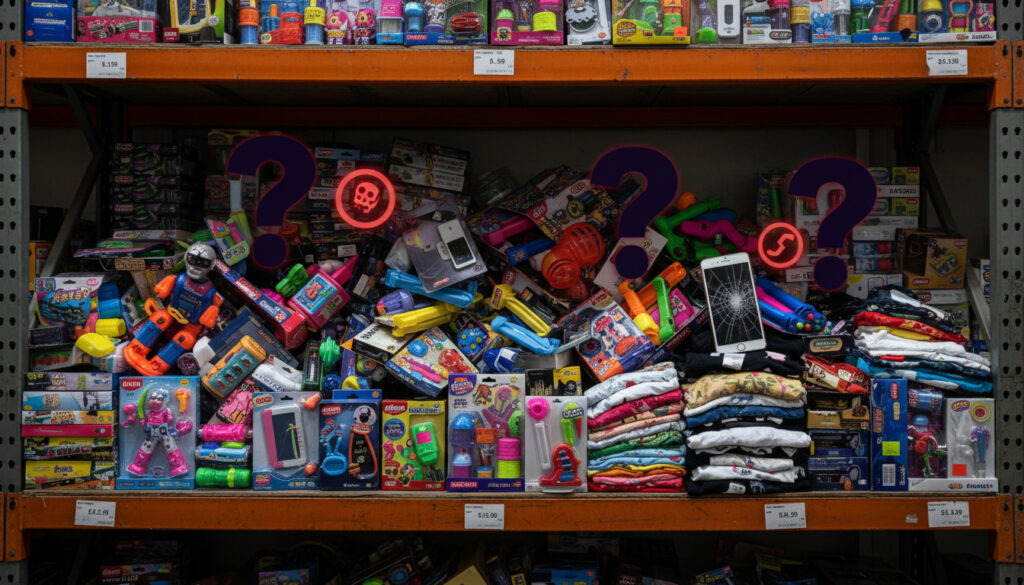
Why Is Temu So Cheap – Real Reasons and Risks Explained
Temu has rapidly become one of the most downloaded shopping applications globally, offering consumer goods at prices that undercut traditional retailers by significant margins. The platform connects buyers directly to manufacturers based primarily in China, eliminating conventional supply chain intermediaries to achieve these cost reductions.
Shoppers frequently encounter items priced at fractions of standard retail costs, prompting widespread questions about the sustainability and integrity of such discounts. While the immediate savings prove attractive, particularly for budget-conscious consumers in the UK and elsewhere, the mechanisms enabling these prices involve complex trade-offs between cost efficiency, product quality, and labor practices.
This examination dissects the operational strategies that allow Temu to maintain its pricing structure, addressing concerns regarding product safety, ethical manufacturing, and the regulatory frameworks that facilitate cross-border e-commerce. The analysis draws from documented business practices, regulatory reports, and consumer feedback to establish a clear understanding of what drives Temu’s affordability.
Why Is Temu So Cheap?
The platform operates on a direct-to-consumer model that fundamentally restructures traditional retail economics. By connecting shoppers straight to Chinese manufacturers, Temu removes wholesalers, distributors, and domestic warehousing operations from the value chain, substantially reducing overhead costs typically embedded in final prices.
Elimination of middlemen and traditional retail markups
Manufacturing in regions with reduced wage standards
De minimis rules allowing duty-free small package imports
Artificially reduced logistics costs from origin to destination
Key insights into the pricing structure reveal multiple concurrent strategies driving costs downward. The platform leverages economies of scale, utilizing bulk production capabilities to drive per-unit expenses lower. Parent company PDD Holdings facilitates massive volume negotiations with manufacturers, spreading fixed technology and logistics costs across more than 500 million monthly visitors.
- Digital-Only Operations: Absence of physical retail locations eliminates rent, staffing, and maintenance expenses entirely.
- Factory Direct Sourcing: Products ship directly from production facilities to consumers without intermediate handling or domestic warehousing.
- De Minimis Utilization: Shipments valued under approximately $800 enter the US duty-free, avoiding tariff costs that affect traditional importers.
- Subsidized Logistics: Shipping rates remain artificially low through platform subsidies and optimized small-package networks from China.
- Aggressive Promotions: Loss-leading welcome deals and competitive pricing against platforms like Alibaba drive initial customer acquisition.
- Regulatory Arbitrage: Less stringent Chinese safety and labor regulations reduce compliance costs compared to domestic production standards.
| Operational Factor | Documented Impact |
|---|---|
| Direct-to-Consumer Model | Eliminates wholesale and distribution markups |
| Monthly Visitor Volume | Exceeds 500 million users enabling bulk discounts |
| Physical Infrastructure | Zero retail storefronts or domestic warehousing |
| Customs Threshold Exploitation | Duty-free entry for packages under $800 (US) |
| Labor Cost Differential | Manufacturing in lower-wage jurisdictions |
| Shipping Cost Management | Subsidized international small-package rates |
| Consumer Complaint Profile | 74% relate to shopping and delivery problems |
| Corporate Ownership | Subsidiary of PDD Holdings (Pinduoduo parent) |
For a detailed breakdown of the financial mechanics, see Why Is Temu So Cheap – Real Reasons for Low Prices.
Is the Quality on Temu Worth the Low Prices?
While pricing structures create immediate consumer appeal, the correlation between cost and quality presents documented concerns. Product durability frequently reflects the aggressive cost-cutting measures employed throughout the supply chain, with materials and manufacturing standards often diverging from those required of domestic retailers.
Is Temu Cheap Quality?
Independent analysis indicates that 74% of complaints involve shopping problems, including receipt of substandard items, long shipping delays extending to weeks, and inconsistencies between advertised and delivered products. Counterfeit goods and items failing to meet Western safety standards appear regularly within the platform’s catalog.
The absence of rigorous pre-market verification allows non-compliant toys, electronics, and apparel to reach consumers. Quality assessments describe products as cheap in durability, with frequent reports of poor construction and safety risks that would trigger recalls in conventional retail channels.
UK consumer testing has identified specific failures in Temu products, including non-compliant toys and electronics that do not meet EU safety standards. Buyers should exercise caution particularly with items intended for children or involving electrical components.
Why Is Temu So Bad for iPhone?
No specific iPhone-related defects appear in documented reports, though general gadget complaints align with broader quality trends. Accessories and electronics purchased through the platform frequently demonstrate inferior build quality, inconsistent charging capabilities, and shorter lifespans compared to certified alternatives available through authorized retailers.
Is Temu Ethical and Safe to Buy From?
Beyond financial and quality considerations, the platform raises significant questions regarding labor practices and corporate ethics. The mechanisms enabling low prices extend into complex supply chain management that obscures visibility into manufacturing conditions.
Is Temu Ethical?
Investigations highlight concerns regarding potential forced labor within supply chains, specifically involving Xinjiang cotton sourcing. Suppliers reportedly face extreme pressure to reduce costs, sometimes absorbing losses of approximately $30 per order to maintain platform relationships. A Wired probe documented these pressures alongside broader uncertainties regarding worker conditions in Chinese manufacturing facilities.
Temu officially denies exploitation allegations, emphasizing the elimination of middlemen as the primary cost driver. However, verification of working conditions remains incomplete, with investigations flagging substantial risks of rights violations and unsafe labor environments.
While Temu refutes claims of worker exploitation, independent investigations have not confirmed comprehensive ethical compliance across all manufacturing partners. The platform’s rapid scaling creates challenges for supply chain oversight and labor condition verification.
Is Temu UK Safe to Buy From?
UK consumer advocates have identified specific safety failures in products sold through the platform. Testing revealed non-compliant toys, electronics, and apparel that fail to meet established EU safety standards, prompting calls for stricter regulatory oversight of direct-to-consumer imports.
The platform maintains high application store ratings despite these concerns, with a 4.7 out of 5 score reflecting user appreciation for pricing rather than quality assurance. British shoppers face additional considerations regarding warranty enforcement, return logistics, and consumer protection rights when purchasing from offshore entities operating outside domestic retail regulations.
Why Is Temu Getting More Expensive?
Recent speculation regarding price increases contrasts with documented operational realities. While shipping costs from China have experienced upward pressure due to fuel costs and logistical constraints, the platform maintains low retail pricing through continued subsidy programs and scale advantages.
Why Is Temu So Expensive Now?
Contrary to perceptions of rising costs, comprehensive analysis indicates prices remain stable at low levels. Technology sector reporting confirms that Temu continues absorbing shipping cost increases rather than transferring these expenses to consumers, preserving the competitive positioning that drove initial market penetration.
Despite rising international shipping rates from China, Temu has not implemented broad price increases. The platform continues subsidizing logistics costs to maintain market share against competitors like Amazon and Alibaba.
Long-term sustainability of these practices remains uncertain. Columbia University retail analyst Melissa Gamble characterizes the model as “problematic” regarding volume-at-low-price sustainability, suggesting that eventual price adjustments may become necessary as market expansion stabilizes and subsidy budgets contract.
How Has Temu’s Market Position Evolved?
The platform’s trajectory from launch to market dominance reflects aggressive international expansion supported by substantial corporate backing from parent entity PDD Holdings.
-
PDD Holdings launches Temu in the United States, introducing the direct-to-consumer marketplace model to international markets beyond China.
-
Rapid scaling occurs with ultra-low pricing strategies targeting North American and European consumers, achieving top-downloaded status among shopping applications.
-
UK regulatory scrutiny intensifies as consumer groups identify safety standard violations in imported goods, particularly children’s toys and electronic devices failing EU compliance requirements.
-
Shipping cost inflation from China creates margin pressure, though the platform maintains consumer pricing through operational subsidies and continued venture-scale investment.
-
Platform exceeds 500 million monthly active visitors while facing ongoing ethical investigations regarding supply chain labor practices and customs loophole utilization.
What Facts Are Established About Temu?
Distinguishing between verified operational characteristics and areas requiring further investigation helps consumers make informed decisions.
Established Information
- Direct-to-consumer model eliminates traditional retail intermediaries
- De minimis customs rules legally permit duty-free importation below threshold values
- PDD Holdings owns the platform as a Pinduoduo subsidiary
- 74% of documented complaints involve shipping and shopping problems
- Physical goods ship directly from Chinese distribution centers
- Application maintains 4.7/5 store rating despite quality complaints
Information That Remains Unclear
- Specific working conditions across all manufacturing facilities
- Long-term financial sustainability of loss-leading promotional strategies
- Systematic versus isolated safety standard violations
- Future regulatory changes affecting de minimis thresholds
- Definitive proof of forced labor within specific supply chains
- Exact duration of shipping subsidies and pricing stability
How Does Temu Fit Within Global E-Commerce?
Temu represents a distinct evolution from conventional e-commerce platforms by removing multiple intermediaries between factory and consumer. Unlike established marketplaces that may utilize domestic warehousing and third-party logistics providers, the platform ships directly from Chinese distribution centers to international buyers.
This approach contrasts sharply with models requiring physical retail presence or domestic inventory storage, fundamentally altering the cost structure while extending delivery timelines significantly. The business methodology prioritizes price optimization over immediate delivery convenience, creating a distinct market segment for price-tolerant consumers willing to accept longer wait times for substantial discounts.
The platform’s growth coincides with increasing regulatory scrutiny regarding cross-border e-commerce loopholes and consumer protection enforcement. As authorities in the UK and US examine de minimis thresholds and safety compliance for direct imports, Temu’s operational model faces potential structural challenges that could affect future pricing capabilities.
What Do Experts Say About Temu?
Independent analysis from consumer advocacy groups and academic researchers provides critical perspective on the platform’s business practices.
The direct-to-consumer business model enables significant cost reductions, though our testing reveals concerning safety failures in products that fail to meet UK and EU standards.
— Which? UK Consumer Group
This problematic approach to volume-at-low-price sustainability raises questions about long-term viability and the true cost of these consumer goods.
— Melissa Gamble, Columbia University (via CBS News)
Supplier pressure to cut costs—sometimes to zero—has led to documented losses of $30 per order, alongside broader doubts about worker conditions in China.
Should You Buy From Temu?
The decision to purchase depends on individual tolerance for quality variability and extended shipping timelines. While undeniable cost advantages exist through direct-to-consumer models and customs optimizations, these savings correlate with documented risks regarding product safety, durability, and ethical manufacturing uncertainties. For additional risk analysis, see Why Is Temu So Cheap – Pricing Model and Risks Explained.
Frequently Asked Questions
How long does shipping from Temu take?
Shipping typically takes 7 to 21 days depending on destination and selected service level. The platform ships directly from Chinese distribution centers, creating longer transit times compared to domestic warehousing models.
Are products on Temu authentic?
Authenticity varies significantly. While legitimate goods exist, documented reports indicate frequent counterfeit items and quality inconsistencies. Electronics and branded accessories particularly risk being non-genuine or failing to meet advertised specifications.
Who owns and operates Temu?
PDD Holdings, the Chinese parent company of Pinduoduo, owns and operates Temu. The corporation is publicly traded and headquartered in China, utilizing the same direct-to-consumer logistics infrastructure that powers its domestic marketplace operations.
What risks should UK buyers consider?
UK buyers face specific considerations including non-compliant safety standards on toys and electronics, difficulty enforcing consumer rights across jurisdictions, extended return shipping requirements, and potential customs complications post-Brexit.
How does Temu impact local retailers?
Temu’s pricing pressures domestic retailers to reduce margins while circumventing standard import tariffs and regulatory compliance costs. This creates competitive asymmetries that may affect local business viability and tax revenue generation.
More related posts
 LG 65 Inch TV – UK Prices, OLED Models and Deals 2025
 Royal Mail Price Finder – Calculate 2024 UK Postage Costs
 How Fast Can a Kidney Infection Kill You? Timeline & Risks
 Antique Fairs Near Me – UK Weekend Guide 2025
 Dunham Massey National Trust: Fees, Parking & Membership Guide
 What Is Doner Meat – Composition, Origins and Health Facts
 Diary of a Wimpy Kid 2010: Box Office, Cast, Where to Watch
 Joshua Jackson: Biography, Career, and Relationships