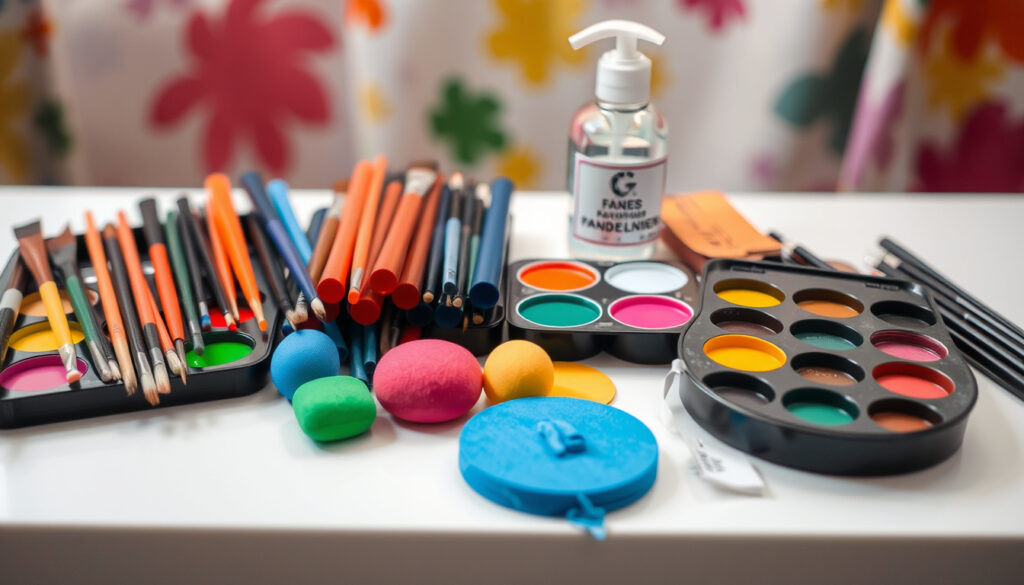
Face Painting for Beginners: Supplies, Safety & Pricing
A child clutching a rainbow butterfly on their cheek, a teenager with a glittering tiger stripe — face painting turns ordinary moments into memories. Behind the smiles lies a world of choices about paint types, safety rules, and costs that can trip up even the most well-meaning beginner.
Typical face paint kit colors: 12 to 18 colors ·
Average time per face: 5 to 10 minutes ·
Average cost per face (professional): $5 to $15 ·
Face paint durability: 4 to 8 hours ·
Common paint type used: Water-based face paint
Quick snapshot
- Learn basic supplies needed (Beginner face painting tutorial)
- Practice simple designs first (Beginner face painting tutorial)
- Understand paint selection (Beginner face painting tutorial)
- Water-based paint is safest (WA Dept. of Health guidance)
- Avoid craft paints (American Academy of Pediatrics skin safety advice)
- Always patch test (AAP patch test recommendation)
- Too much water causes drips (WA Dept. of Health hygiene protocol)
- Skipping layers leads to cracking (WA Dept. of Health hygiene protocol)
- Dirty brushes spread bacteria (WA Dept. of Health hygiene protocol)
- Average rates per face or hour
- Factors that affect price
- How to choose a professional
How do you start face painting for beginners?
Starting face painting doesn’t require an art degree — it requires the right materials and a little patience. A beginner setup costs roughly $100 to $250 according to a popular tutorial for new painters (Face Painting Supplies for Beginners), with 11 essential colors running about $77.
Choose the right face paint kit
Stick with a starter palette of 3 to 5 colors — white, black, red, blue, and yellow let you mix most common shades. Brands like Snazaroo and Mehron are widely recommended by professional face painters and are available at most craft stores. A full 12-color kit typically costs between $20 and $40.
Practice basic brush strokes
Master three brush techniques before attempting full designs: the flat stroke (filling areas), the chisel edge (thin lines), and the stipple motion (sponge texture). Use a damp sponge — not soaking wet — to apply base coats evenly, as noted by the Government of Western Australia Department of Health.
Try simple designs first
Start with symmetrical shapes like butterflies, tigers, and rainbows. These designs use 2–3 colors and take 5 to 10 minutes per face. Use stencils for your first attempts — they reduce the risk of uneven lines and help build confidence.
Follow a step-by-step beginner tutorial
Online tutorials on platforms like YouTube offer free walkthroughs for every skill level. A good beginner tutorial will cover loading the brush correctly, applying layered color, and cleaning up mistakes without starting over.
A starter kit under $30 may cost less upfront but could include pigments that stain skin or lack proper labeling — a case where cheap materials create more trouble than they save.
Bottom line: A beginner face painting kit is an affordable investment ($100–$250 total) that pays for itself in a few events. Anyone with steady hands and patience can learn: stick to 3–5 colors, practice on paper first, and always patch test the paint on skin before a full application.
What kind of paint to use for face painting?
Not all paint is skin-safe — this is the single most important distinction a beginner must learn. The wrong paint can cause rashes, allergic reactions, or even chemical burns.
Water-based vs oil-based face paint
Water-based face paint is the standard for beginners and professionals alike. It dries quickly, is easy to remove with soap and water, and is generally gentler on skin. Oil-based paints are more waterproof and last longer but require special removers and are harder to work with for intricate designs. The Government of Western Australia Department of Health recommends only using products specifically designed for human skin.
Professional vs costume-grade paint
Professional face paints (Snazaroo, Mehron, Kryolan) undergo testing for skin safety, whereas costume-grade or “halloween” paints often use lower-quality pigments that can cause irritation. According to HealthyChildren.org (American Academy of Pediatrics), the term “non-toxic” does not guarantee safety on skin — always check for specific skin-safe labeling.
How to identify safe, non-toxic face paint
Look for these markers: FDA-approved or CE-marked labeling, a full ingredient list in English, and a manufacturer’s contact information. Avoid acrylic paint, craft paint, and school-grade tempera — these contain binders and pigments not intended for skin and can cause contact dermatitis (American Academy of Pediatrics skin safety advice).
The core distinction is simple: cosmetics-grade paint passes safety standards; craft paint does not. Beginners should spend the extra few dollars per color on professional water-based paint every time.
Bottom line: Water-based cosmetic-grade paint protects the skin and enables easier cleanup. Anyone who skips the professional brands risks allergic reactions that turn a fun activity into a medical problem.
What are common face paint mistakes?
Even talented beginners make predictable errors — and knowing them ahead of time saves ruined designs and frustrated kids.
Using too much water
Thin paint drips, runs into unwanted areas, and takes longer to dry. The WA Department of Health advises using a damp sponge — not a wet one — to avoid this. Load your brush with color, then tap off excess on a paper towel.
Skipping the base coat
A white or skin-tone base coat provides a uniform surface for the design colors and prevents the skin’s natural oils from bleeding through. Skipping it leads to patchy coverage and fading within 30 minutes.
Painting over wet paint
Layers need to dry before you add the next color. Painting over wet base coats smears colors together and turns crisp lines into muddy edges. Wait 30–60 seconds between layers — water-based paint dries fast.
Not cleaning sponges and brushes
Dirty tools breed bacteria. Single-use disposable sponges are recommended by the WA Department of Health for each person. Brushes should be washed in warm water and soap, then soaked in 70% isopropyl alcohol for at least 2 minutes between clients. Change the cleaning water after each person.
A dirty sponge used on two children can transfer bacteria between them — what reads as a minor hygiene shortcut can lead to staph infections or impetigo in vulnerable kids.
Bottom line: The most common beginner mistakes — excess water, missing base layers, wet-on-wet smearing, and dirty tools — are all avoidable with slow, deliberate practice. Hygiene isn’t optional: treat each brush clean as seriously as the design itself.
What is the average price for a face painter?
Hiring a professional face painter costs more than doing it yourself, but the quality and safety guarantees can be worth it for events. Here is what the market typically charges.
Five pricing models, one pattern: location, experience, and design complexity drive the final cost more than the paint itself.
| Pricing model | Typical range | Best for | Typical duration |
|---|---|---|---|
| Per face (simple design) | $5–$15 | Carnivals, small parties | 5–10 min per person |
| Per face (complex design) | $15–$30 | Full-face art, 3D effects | 15–30 min per person |
| Hourly rate | $50–$150 | Events with 20+ guests | 2–4 hour minimum |
| Event package (2–3 hours) | $200–$400 | Birthday parties, festivals | 2–3 hours |
| Full-day event (6–8 hours) | $500–$1,000 | Large festivals, corporate events | 6–8 hours |
The implication: for a birthday party with 15 children, hiring a professional at $200–$400 costs less than buying a full kit and spending 3 hours painting yourself — but only if you value your time at more than zero.
Factors affecting cost
Three variables matter most: geographic location (rates in major cities are 30–50% higher than rural areas), experience level (beginners charge $50/hour, established professionals charge up to $150/hour), and design complexity (a simple butterfly takes 5 minutes; a tiger with 3D effect can take 20). Travel fees of $25–$50 are common for events outside a 10-mile radius.
How to compare quotes
Ask for a per-face or per-hour breakdown, check that travel and materials (glitter, gems) are included, and request photos of recent work. Reputable painters carry liability insurance — ask to see proof.
What are the rules for face painting?
Beyond the creative part, face painting has hygiene and safety rules that protect both the artist and the person wearing the paint. These are not suggestions — they are standards set by health authorities.
Safety guidelines for children
The American Academy of Pediatrics (HealthyChildren.org) advises parents to test a small amount of face paint on a child’s arm a few days before an event. Never paint on broken, irritated, or sunburned skin. Keep paint at least 1 inch away from the eyes and mouth, and avoid painting very young children who cannot keep still.
Hygiene and sanitation practices
The Government of Western Australia Department of Health mandates: single-use disposable applicators for each client, brushes cleaned with 70% isopropyl alcohol between uses, changing cleaning water after each client, and washing hands before every session. Eye and lip pencils must be resharpened after each use. If a face paint smells bad, it may be contaminated and should be discarded (American Academy of Pediatrics).
Allergy considerations and patch testing
Common allergens in face paint include fragrances, preservatives, and certain red or purple pigments (FD&C Red 40, Blue 1). Always do a 24-hour patch test on the inner arm before painting the face. Do not share makeup — the American Academy of Pediatrics warns this increases infection risk. Remove face paint at the end of the day, not overnight.
A child allergic to carmine (a red pigment derived from insects) could develop a rash covering their whole face if the painter skips the patch test — a moment of convenience that turns a birthday party into a doctor’s visit.
Expert perspectives on face painting safety
“The biggest mistake parents make is assuming that any paint labeled ‘non-toxic’ is safe for skin. That label refers to ingestion, not dermal contact. You need paint specifically formulated for cosmetic use on the face.”
— Professional face painter, industry safety consultant
“We recommend a simple patch test on the inner arm 24 hours before an event. Most allergic reactions to face paint are delayed — they don’t appear until the next day. A quick test avoids a ruined celebration.”
— Pediatric dermatologist, skin safety specialist
Both experts agree on one core principle: prevention beats treatment. A 5-minute patch test costs nothing; treating a severe allergic reaction costs time, stress, and potentially an emergency room visit.
facepaintingschool.com, joinbubble.com, yahoo.com, reddit.com, cosmeticsandtoiletries.com
For a more detailed look at getting started, check out this guide on face painting for beginners that covers tips, pricing, and side hustle ideas.
Frequently asked questions
What is the best face paint brand for beginners?
Snazaroo and Mehron are widely recommended for their water-based formulas, wide color ranges, and FDA-approved ingredients. Both are available at craft stores and online for $5–$10 per color.
Can I use food coloring for face painting?
No. Food coloring is not tested for skin safety and can cause staining or allergic reactions. Always use paint specifically formulated for cosmetic use on skin.
How do I remove face paint without soap?
Baby wipes or micellar water on a cotton pad can remove water-based face paint effectively. For stubborn areas, apply a thin layer of baby oil or coconut oil, let it sit for 30 seconds, then wipe gently.
Is face painting safe for toddlers?
It can be, with precautions. The American Academy of Pediatrics recommends painting only children old enough to sit still. Avoid the eye area, use hypoallergenic paints, and patch test 24 hours ahead.
What designs are easiest for beginners to paint?
Butterflies, tigers, rainbows, and superhero masks are the easiest because they use symmetrical shapes and 2–3 colors. Stencils can help until you develop steady brush control.
How do I become a professional face painter?
Build a portfolio with 50–100 designs, practice on volunteers, get liability insurance, and start marketing to local birthday parties and festivals. Certification programs from organizations like the Face Painting Association can help build credibility.
Does face paint expire?
Yes. Most water-based face paints last 1–2 years unopened and 6–12 months after opening. If it smells bad, has separated, or changed texture, discard it. The American Academy of Pediatrics advises: “If it smells bad, it could be contaminated and should be thrown away.”
Related reading
- Best Teeth Whitening Strips: Top Picks, Safety & Dentist Advice — another beginner-focused guide with safety-first advice
- Red Blotches on Skin: Causes, When to Worry, and Pictures — for understanding skin reactions to paints and allergens
More related posts
 Lucy Pargeter: Split, Engagement, Children & Emmerdale News
 When Does FC 26 Come Out? Release Date, Early Access & More
 Monaco Grand Prix 2025 – Dates, Results, Schedule and Tickets
 Julie Hogg: What Happened and How Her Mother Changed UK Law
 What Do Hedgehogs Eat? A Complete Guide to Hedgehog Diet
 Countries Beginning with Y: Yemen Facts & Rare Letters
 Matt Czuchry: Personal Life, Career & Facts (2024)