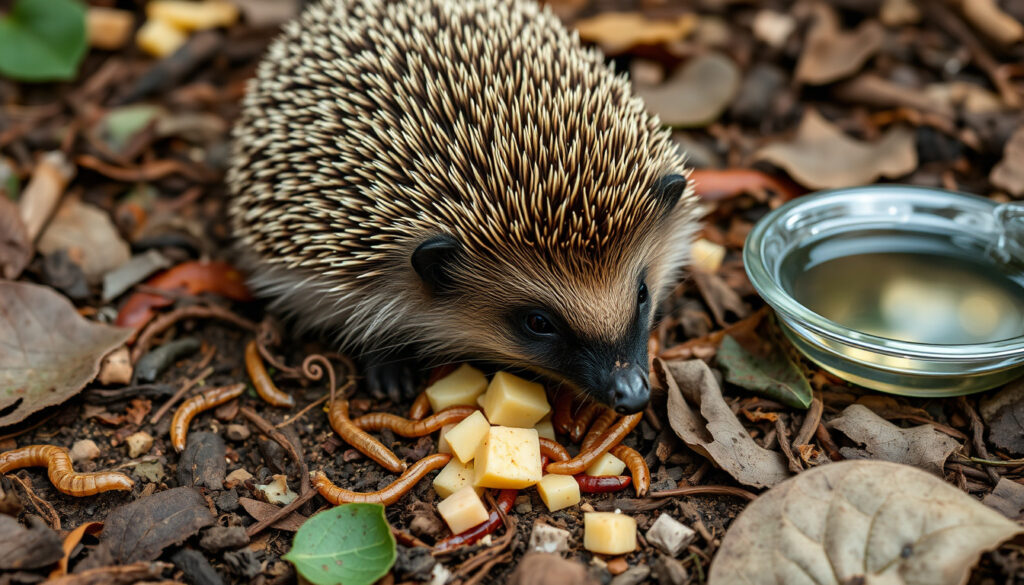
What Do Hedgehogs Eat? A Complete Guide to Hedgehog Diet
Few garden visitors are as endearing as a hedgehog snuffling through the undergrowth, but many people get their diet wrong. These nocturnal foragers have a surprisingly specialised appetite shaped by millions of years of evolution, and the food you put out can help or harm them – this guide breaks down what they eat in the wild, how to supplement safely, and which foods to avoid.
Natural diet: Insects and other invertebrates ·
Daily food intake: 70–100 grams ·
Number of insects per night: Up to 200 ·
Ideal feeding time: Dusk ·
Water requirement: Fresh water daily
Quick snapshot
- Insects, worms, slugs (Woodland Trust)
- Beetles, caterpillars (VCA Animal Hospitals)
- Occasional small vertebrates (Hedgehog Headquarters)
- Meat-based cat or dog food (VCA Animal Hospitals) (Hedgehog Street)
- Specialist hedgehog food (Hedgehog Street)
- Fresh water (Woodland Trust) (Hedgehog Street)
- Milk and bread (VCA Animal Hospitals) (British Hedgehog Preservation Society)
- Avocado, chocolate, grapes (VCA Animal Hospitals) (British Hedgehog Preservation Society)
- Mealworms in excess (British Hedgehog Preservation Society)
- Feed at dusk (VCA Animal Hospitals)
- Use shallow dish (Hedgehog Street)
- Place in sheltered spot (Woodland Trust)
Six key facts about hedgehog biology and feeding patterns:
| Characteristic | Details |
|---|---|
| Scientific name | Erinaceus europaeus |
| Diet type | Insectivore |
| Active hours | Nocturnal |
| Lifespan | 2–5 years in the wild |
| Daily food intake | 70–100 g |
| Number of insects per night | Up to 200 |
What do hedgehogs eat in the wild?
In their natural habitat, hedgehogs are insectivores with a diet dominated by invertebrates. The Woodland Trust (UK woodland conservation charity) explains that their typical menu includes beetles, earwigs, caterpillars, earthworms, millipedes, and fly larvae. These protein-rich insects form the bulk of what hedgehogs consume each night.
Between 70–100 grams of food nightly translates to roughly 200 individual invertebrates — an impressive foraging effort for a creature weighing around one kilogram.
What insects do hedgehogs prefer?
Hedgehogs tend to favour soft-bodied insects when available — caterpillars and earthworms are easy targets. But they will also tackle harder prey such as beetles and grasshoppers when those are easier to catch, according to Specialized Care for Avian & Exotic Pets (exotic pet care resource). They often consume the whole insect, exoskeleton and all, which provides chitin — a source of dietary fibre.
Do hedgehogs eat slugs and snails?
Yes, slugs and snails are part of the hedgehog diet, though they are not a preferred food. The Woodland Trust notes that hedgehogs are opportunistic eaters and will take slugs when they come across them. However, slugs can carry lungworm parasites, so they are not an ideal staple.
What do hedgehogs eat in urban areas?
Urban hedgehogs adapt to whatever prey is available in gardens, parks, and green spaces. Their diet in towns often includes beetles, earwigs, and earthworms from flower beds and compost heaps. The Hedgehog Street (wildlife conservation campaign) says that providing supplementary food in gardens can help hedgehogs in urban areas where natural prey may be less abundant.
The implication: a hedgehog’s wild diet is almost entirely animal-based protein. Carbohydrates and plant matter only appear as rare extras, not a daily food source.
What can I feed a hedgehog?
If you want to help visiting hedgehogs in your garden, several safe and nutritious options exist. The VCA Animal Hospitals (veterinary network) recommends a diet based on high-quality hedgehog food or high-quality, low-fat cat food as the foundation.
Is cat food safe for hedgehogs?
Yes, but choose wisely. VCA Animal Hospitals says meat-based wet or dry cat food with high protein content is suitable. Avoid fish-flavoured varieties, which can cause digestive upset. Specialist hedgehog food is also available and formulated to match their nutritional needs.
What fruits can hedgehogs eat?
Fruit should only be offered rarely and in tiny amounts. VCA Animal Hospitals lists small amounts of apples, bananas, berries, and melon as occasional treats — two to three times per week at most. Hedgehogs have difficulty digesting fruit sugars, and too much can cause diarrhea.
How often should I feed a visiting hedgehog?
Feed once per evening, ideally at dusk when hedgehogs become active. The Hedgehog Street advises putting food out at the same time each night so the hedgehog learns the routine. Provide just enough for one feeding — a shallow dish of cat food or specialist mix — and remove leftovers in the morning to avoid attracting rats.
Never feed milk or bread. Hedgehogs cannot digest lactose, and bread offers no nutritional value, filling them up without providing the protein they need.
- Feed at dusk when hedgehogs become active.
- Use a shallow dish to prevent tipping.
- Place food in a sheltered spot away from predators.
- Provide just enough food for one feeding (70–100 grams).
- Remove leftovers in the morning to avoid attracting rats.
- Provide fresh water daily in a heavy bowl.
What should you never feed a hedgehog?
Some foods are outright dangerous. The VCA Animal Hospitals explicitly warns against feeding avocados because they are toxic to hedgehogs. Raw meats and raw eggs are also off-limits due to the risk of salmonella infection.
What foods are toxic to hedgehogs?
Several common foods can cause serious harm. The British Hedgehog Preservation Society (UK wildlife charity) lists avocados, chocolate, grapes, raisins, onions, and garlic as toxic. These foods can trigger symptoms ranging from vomiting to organ failure.
Can hedgehogs eat Weetabix?
No. Hedgehog Street states that Weetabix and other breakfast cereals offer no nutritional value for hedgehogs. They are high in sugar and grains, which hedgehogs cannot digest properly. Avoid all processed human foods.
Why this matters: a single feeding mistake can cause days of digestive distress or even fatal illness. Hedgehogs have evolved on a high-protein, low-carbohydrate diet, and their digestive systems cannot handle modern processed foods.
What foods are toxic to hedgehogs?
Beyond the clear toxins listed above, several other foods routinely cause problems. The VCA Animal Hospitals advises avoiding lettuce and celery because they have minimal nutritional value. Fruit in large quantities is hard to digest and can cause diarrhea.
Are there any fruits or vegetables hedgehogs cannot eat?
Avocado is the most dangerous fruit — it contains persin, a fungicidal toxin that can cause respiratory distress and death in hedgehogs. Seeds and pits from stone fruits (peaches, plums, apricots) are choking hazards and should never be offered.
Why is mealworm overfeeding dangerous?
The British Hedgehog Preservation Society warns that mealworms are high in phosphorus and low in calcium. A diet heavy in mealworms can lead to metabolic bone disease, where the hedgehog’s body leaches calcium from its bones. Offer mealworms as a rare treat only — no more than one teaspoon per week.
Many well-meaning gardeners put out mealworms believing they are helping. In reality, overfeeding mealworms can cripple a hedgehog’s skeletal system. Fewer mealworms, more cat food.
The pattern: most toxic foods share one trait — they are high in fats, sugars, or oxalates that hedgehogs cannot metabolise. Stick to meat-based protein, and you will rarely go wrong.
What do hedgehogs eat in the winter?
Winter presents a different challenge. Hedgehogs hibernate from approximately November through March in the UK, depending on the weather. But before hibernation, they must build up substantial fat reserves.
Do hedgehogs need extra food in autumn?
Yes. The Woodland Trust says hedgehogs need to build fat stores throughout autumn to survive hibernation. Offer high-protein foods like meat-based cat food or specialist hedgehog food in larger quantities during September and October.
What should I feed a hedgehog before hibernation?
Focus on protein and fat. Cat food with a higher fat content (around 15–20%) helps hedgehogs pack on weight. The Hedgehog Street recommends continuing to provide fresh water even in cold weather, as hedgehogs wake periodically during hibernation to drink.
After the first hard frost, stop feeding if hedgehogs have stopped visiting completely — they are likely already hibernating. Uneaten food will only attract rodents.
The trade-off: autumn feeding is essential in urban areas where natural prey is scarce, but overfeeding a hedgehog that will not hibernate can lead to obesity and health problems.
Foods hedgehogs eat that surprise most people
Hedgehogs are opportunistic omnivores, which means they occasionally eat things beyond insects. Hedgehog Headquarters (hedgehog care resource) notes that wild hedgehogs may feed on carrion, small vertebrates, birds’ eggs, and fallen fruit when available. The Woodland Trust confirms this opportunistic behaviour — hedgehogs will eat birds’ eggs if they come across them, but it is not a significant part of their diet.
Just because hedgehogs occasionally eat fruit in the wild does not mean you should put out fruit bowls. Wild fruits are hard and fibrous; cultivated fruits are sugary and soft, causing digestive issues.
Wild hedgehogs eat a wide range of natural foods, but the key items are invertebrates such as worms, beetles, slugs, caterpillars, millipedes & earwigs.
Hedgehog Street (wildlife conservation campaign)
Insects and other invertebrates are the hedgehog’s main natural food source. A typical diet includes beetles, earwigs, caterpillars, earthworms.
Frequently asked questions
How much should I feed a hedgehog?
One shallow dish of food per evening at dusk is enough. Provide roughly 70–100 grams of food — about two tablespoons of wet cat food or specialist hedgehog mix. Remove leftovers in the morning.
Do hedgehogs eat slugs?
Yes, hedgehogs eat slugs when they come across them, but they are not a preferred food. Slugs can carry lungworm parasites, so relying on hedgehogs for slug control is risky for the hedgehog’s health.
Can hedgehogs eat cat food?
Yes, meat-based wet or dry cat food is a safe and nutritious option. Avoid fish-flavoured varieties. Choose food with high protein content and low fat (under 15% for regular feeding).
What do baby hedgehogs eat?
Baby hedgehogs (hoglets) drink their mother’s milk until weaning at around 4–6 weeks. After weaning, they eat the same food as adults — insects, cat food, and specialist hedgehog food — but in smaller portions. Never give cow’s milk to hoglets.
Do hedgehogs need water?
Yes, absolutely. Provide fresh water daily in a shallow, heavy bowl that cannot tip over. Water is even more important than food for hedgehog health, especially during dry summer months and in winter when they wake from hibernation.
What do hedgehogs eat in autumn?
In autumn, hedgehogs need high-protein, high-fat foods to build fat reserves for hibernation. Offer meat-based cat food with slightly higher fat content (15–20%). Continue providing water. Feed larger portions during September and October.
Is it safe to feed hedgehogs mealworms?
Only in strict moderation. Mealworms are high in phosphorus and low in calcium, which can cause metabolic bone disease if overfed. Limit mealworms to a teaspoon once per week as an occasional treat, not a staple.
More related posts
 Shoe Zone Near Me – UK Stores, Opening Times & Locator Guide
 Monaco Grand Prix 2025 – Dates, Results, Schedule and Tickets
 Tom Burke: Biography, Career, Net Worth & Personal Life
 Diary of a Wimpy Kid 2010: Box Office, Cast, Where to Watch
 Paul Sun-Hyung Lee: Biography, Wife, Movies & TV Shows
 Mary Seacole: Crimean War Nurse and Her Lasting Legacy
 Monica Dolan: Biography, Partner, Roles, and Awards
 What Is Intermittent Fasting – Schedules, Benefits and Risks