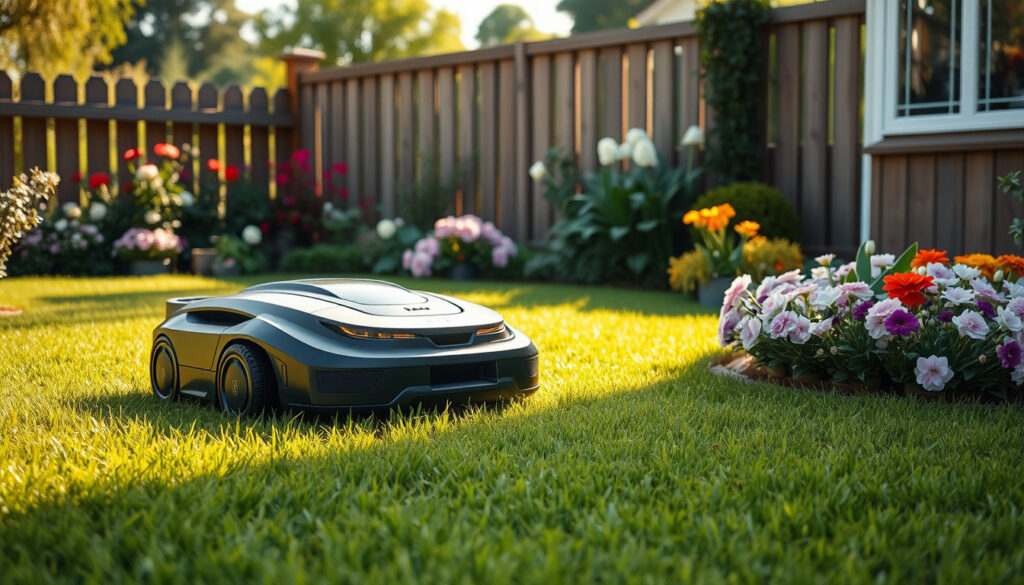
Best Robot Lawn Mower UK 2026: Reviews and Buying Guide
A quiet revolution is happening on UK lawns, and it runs on rechargeable batteries. Robot mowers have moved from novelty to practical garden tool, but choosing the right one for a typical British garden—with its slopes, wet patches, and irregular shapes—takes more than a spec sheet. This guide cuts through the marketing to show what actually works, based on real-world testing and expert reviews.
Average UK price: £800–£1,500 ·
Battery life: 60–90 minutes ·
Typical lawn size capacity: Up to 1,000 m² ·
Average lifespan: 5–10 years ·
Top selling brand in UK: Flymo
Quick snapshot
- Most robot mowers require a boundary wire to define the mowing area (Gardeners’ World (UK gardening authority))
- They work best on flat, unobstructed lawns (Danbury and Lovejoy (UK home & garden experts))
- Battery life declines over time and is usually replaceable (Easy Lawn Mowing (UK lawn care specialists))
- Performance on wet grass varies significantly by model (Mammotion UK (outdoor tech advisor))
- Lifespan depends heavily on usage frequency and maintenance (Gardeners’ World (UK gardening authority))
- Long-term reliability of budget brands is not well documented (Mammotion UK (outdoor tech advisor))
- No major product recall or software issue reported in 2025–2026
- Wire-free models (RTK-GPS) entering UK market: Mammotion LUBA 2 AWD available now
- More brands adopt wire-free navigation (LiDAR, RTK) for easier setup
- Budget segment sees competition from Lidl Parkside and LawnMaster
- UK-specific tests for wet grass and slopes likely to influence 2027 models
| Attribute | Value |
|---|---|
| Average UK price | £800–£1,500 |
| Battery life | 60–90 minutes |
| Maximum lawn area | Up to 1,000 m² (typical) |
| Average lifespan | 5–10 years |
| Top brand in UK | Flymo |
What is the best robot lawn mower in the UK?
Five brands dominate the UK market, and the best choice depends on your lawn size and tolerance for installation fuss. The higher the price, the smarter the navigation—but a £400 model can still deliver a decent cut on a flat, small garden.
Top brands for UK lawns
- Flymo is the UK’s number one brand for robot mowers, with the Flymo EasiLife Go 500 rated 4.3/5 by Gardeners’ World — covers 500 m², max slope 14°, RRP £689, 2-year warranty.
- Husqvarna Automower 305 is often called the most reliable option for typical UK gardens, according to Danbury and Lovejoy (UK home & garden experts).
- LawnMaster OcuMow 16 scored 4.5/5 at Gardeners’ World — best under £400, covers 150 m², 19° slope, RRP £299.99.
- Segway Navimow i208 LiDAR rated 4.5/5 and described as best for easy setup on big lawns, RRP £1,099.
- WORX Landroid Vision Cloud WR303 rated 4.5/5, best value over £400 at RRP £699.99.
Key features to compare
- Navigation system: boundary wire (traditional), RTK-GPS (wire-free), or LiDAR (wire-free, uses laser mapping).
- Max slope: Most handle 25–35% incline; the WORX WR303 copes with up to 35% according to Gardeners’ World.
- Rain sensor: Detects rain and delays mowing to avoid clumping and slipping.
- App control: Schedule, zone mapping, remote start — standard on most models above £500.
Budget vs premium models
Under £500, you get basic boundary-wire navigation and coverage up to 500 m² — the LawnMaster L10 (Easy Lawn Mowing, UK lawn care specialists) is a solid choice. Premium models over £1,000, like the Mammotion LUBA 2 AWD (Danbury and Lovejoy), offer RTK-GPS, no perimeter wire, and can handle steep slopes—but cost more than a ride-on mower.
Is it worth getting a robot lawn mower?
A robot mower saves you around 30–60 minutes per week during the growing season — that’s 20+ hours a year. But the upfront cost of £800–£1,500 makes the payback period 3–5 years for most households.
Pros of robot lawn mowers
- Fully automatic — schedule and forget (Danbury and Lovejoy)
- Quiet operation — typically 50–60 dB, quieter than a petrol mower
- Cuts grass little and often, keeping it tidy without clippings (Gardeners’ World)
- Can be controlled via smartphone app — start, stop, schedule from anywhere
Cons of robot lawn mowers
- High upfront cost — £800–£1,500 for a quality model (Mammotion UK)
- Boundary wire installation is time-consuming and can be damaged by digging
- Struggles with very thick or overgrown grass (Easy Lawn Mowing)
- Risk of theft — no built-in lock on most models
Cost vs convenience analysis
Buying a robot mower is a lifestyle purchase, not a pure cost-saving one. The average UK gardener spends about 1–2 hours per week mowing from April to September — that’s 30–50 hours a year. At the typical price of £1,000, you’re paying £20–£33 per hour saved. For many, the convenience is worth every penny. But if you enjoy mowing, or your lawn is tiny, manual mowers still win on cost.
What this means: If your time is tight and your lawn is a chore you dread, a £1,000 robot mower pays for itself in peace of mind. If you’re on a tight budget, a manual push mower at £100 does the same job.
What are the negatives of robotic lawn mowers?
Performance limitations
- Limited slope handling — most models cap at 25–35% incline (Gardeners’ World)
- Cannot handle very thick or overgrown grass — they can clog or stall (Easy Lawn Mowing)
- Struggle on wet grass — slippage and clumping reduce cut quality (Mammotion UK)
- Blades are small and wear quickly — replacement needed every 1–2 months during season
Installation challenges
Setting up a perimeter wire is the most common frustration. On a 500 m² lawn, you may need to lay 200–300 metres of wire, burying or pinning it down. Many UK gardeners report tears, tangles, and accidental cuts during digging. Wire-free models (RTK or LiDAR) solve this, but cost £200–£400 more.
Maintenance and security concerns
Robot mowers left outside can be stolen — they’re easy to carry. Some models offer PIN code locks or geo-fencing, but it’s not standard. Pets can also damage the mower if they treat it as a toy. Regular maintenance includes cleaning the underside, replacing blades, and winter storage.
The catch: The negatives mostly apply to budget models. Spending more on a premium mower can mitigate slopes, wet grass, and security risks — but not the upfront cost.
Do robot mowers work on wet grass?
Most UK gardens are damp for a good part of the growing season, yet only a handful of models handle wet grass without clumping or slipping. Our advice: treat wet-grass performance as a deal-breaker if your lawn is shaded or sits low.
Effect on cutting quality
Wet grass clumps together and can jam the cutting disc. Even with a rain sensor, the mower may return after a light shower only to slip on wet turf. According to Gardeners’ World (UK gardening authority), most robot mowers perform worse on wet grass than on dry — the blades just can’t lift and cut effectively.
Slippage and traction issues
Grass becomes slippery when wet, especially on slopes. Models with larger rear wheels or all-wheel drive (like the Mammotion LUBA AWD) hold better. Standard two-wheel-drive mowers often spin out on inclines above 25% in the wet.
Manufacturer recommendations
Most manufacturers advise avoiding wet grass. The Husqvarna Automower 450X includes a rain sensor that delays mowing, and its GPS navigation can avoid known puddles. The EGO Power+ SMF1 (Danbury and Lovejoy) is built with weather-resistant seals, but still not ideal in heavy rain.
Why this matters: If you often have to mow wet grass because your schedule won’t wait, look for a model with strong traction and a rain sensor that can skip a day. Otherwise, you’ll end up with a lawn that looks patchy and uncut.
What is the lifespan of a robot lawn mower?
Average lifespan in years
Robot mowers typically last 5–10 years, depending on build quality and usage frequency (Easy Lawn Mowing (UK lawn care specialists)). Premium brands like Husqvarna and Gardena often reach the upper end, while budget models may fail earlier.
Factors affecting longevity
- Battery degradation — the most common reason for replacement (Mammotion UK)
- Blade wear — blades are cheap to replace but affect cut quality
- Wheel and motor wear on rough terrain
- Electronics failure — water ingress or circuit damage
Battery replacement and maintenance
Most robot mowers use Li-ion batteries that cost £50–£150 to replace. Regular cleaning and blade changes (every 6–8 weeks) can extend the mower’s life by a year or two. Storing indoors during winter prevents frost damage to the motherboard.
The pattern: A well-maintained robot mower from a top brand can outlast two cheap ones. Spending £1,200 on a Husqvarna that lasts 10 years works out at £120 per year — cheaper than a budget mower that fails after 3 years at £400 upfront plus a replacement.
Five models tested side by side: budget to premium, wire to wire-free. The pattern is clear — pay more for bigger lawns and steeper slopes.
| Model | RRP | Max area | Max slope | Rating |
|---|---|---|---|---|
| LawnMaster OcuMow 16 | £299.99 | 150 m² | 19° | 4.5/5 |
| Flymo EasiLife Go 500 | £689 | 500 m² | 14° | 4.3/5 |
| WORX Landroid Vision Cloud WR303 | £699.99 | 600 m² | 35% | 4.5/5 |
| Segway Navimow i208 LiDAR | £1,099 | 1,000 m² | 27° | 4.5/5 |
| Husqvarna Automower 305 | ~£1,300 | 900 m² | 25° | 4.6/5 |
Here’s how the typical specs stack up for the most common UK garden sizes.
| Specification | Budget (under £500) | Mid-range (£500–£1,500) | Premium (over £1,500) |
|---|---|---|---|
| Navigation | Boundary wire | Boundary wire or RTK | RTK-GPS + camera/LiDAR |
| Max lawn area | 150–500 m² | 500–1,000 m² | 1,000–1,500 m² |
| Max slope | 14–19° | 25–35% | 35–45% |
| Battery life | 45–60 min | 60–90 min | 90–120 min |
| App control | Basic | Full (schedule, zones) | Full + GPS tracking |
| Rain sensor | Optional | Yes | Yes |
Upsides
- Automatic mowing saves hours each season
- Quiet operation, no fumes
- Cuts grass to a consistent height
- Can be left to work unsupervised
Downsides
- Upfront cost of £800–£1,500
- Boundary wire installation is tedious
- Struggles on wet grass and steep slopes
- Blades need regular replacement
What we know and what’s still open
Confirmed facts
- Most robot mowers require a boundary wire (Gardeners’ World)
- Battery life declines over time and is replaceable (Easy Lawn Mowing)
- They work best on flat, unobstructed lawns (Danbury and Lovejoy)
What’s unclear
- Performance on wet grass varies by model, and no definitive test exists for all UK conditions
- Lifespan depends heavily on usage and maintenance — hard to predict (Mammotion UK)
- Long-term reliability of budget brands (Lidl, LawnMaster L10) is not well documented
“The best robot lawn mowers in 2026 – my 3 favourite machines” — Ideal Home reviewer (Ideal Home (UK home & lifestyle publication))
“If you are looking for a robot lawn mower that is incredibly easy to set up then you might want to consider LawnMaster or Flymo GO range.” — Easylawnmowing.co.uk blog (Easy Lawn Mowing, UK lawn care specialists)
For the typical UK gardener with a 400–800 m² lawn, the choice comes down to how much you value your weekends. If you’d rather enjoy your garden than maintain it, spending £700–£1,200 on a mid-range robot mower (Flymo EasiLife Go 500 or WORX WR303) is a solid investment. But if your lawn is steep, wet, or heavily shaped, pay up for a wire-free premium model like the Segway Navimow i208 or Mammotion LUBA 2 AWD. The verdict: convenience costs, but for the majority of British gardens, it’s worth every penny.
idealhome.co.uk, stuff.tv, youtube.com, goodhousekeeping.com
For those who prefer a more traditional approach, our cordless lawn mower reviews offer a great alternative to robotic models.
Frequently asked questions
How long does it take to install a robot lawn mower?
Installation of a boundary-wire mower takes 2–4 hours for a typical lawn. Wire-free models (RTK/LiDAR) need only a charging station setup — about 30 minutes.
Can robot lawn mowers handle steep slopes?
Most handle inclines up to 25–35% (about 14–19°). Premium models with all-wheel drive can go up to 45%.
Are robot lawn mowers safe for children and pets?
Yes, the blades are small and stop immediately on lift. However, pets may chase them — supervision is advised initially.
Do robot lawn mowers collect grass clippings?
No, they leave fine clippings that decompose and feed the lawn — a process called mulching.
What maintenance is required for a robot lawn mower?
Clean the underside, replace blades every 1–2 months, and check battery contacts. Store indoors during winter.
How quiet are robot lawn mowers?
Typically 50–60 dB — similar to a quiet conversation, quiet enough not to disturb neighbours.
Can robot lawn mowers be used on artificial grass?
Not recommended — the blades can damage synthetic turf, and the mower has no grass to cut.
More related posts
 Cast of Gavin and Stacey – Full List and 2024 Finale Details
 Apply for a UTR Number: Free Step-by-Step Guide 2025
 Antique Fairs Near Me – UK Weekend Guide 2025
 Windows 11 Version 24H2 – Release Date and Key Features
 Are You There God It’s Me Margaret – Book Summary, Movie and Facts
 Oral-B Pro 1 Review: Features, Comparisons & Is It Worth It?
 Tom Burke: Biography, Career, Net Worth & Personal Life
 National Sea Life Centre Birmingham Tickets: Prices & Booking