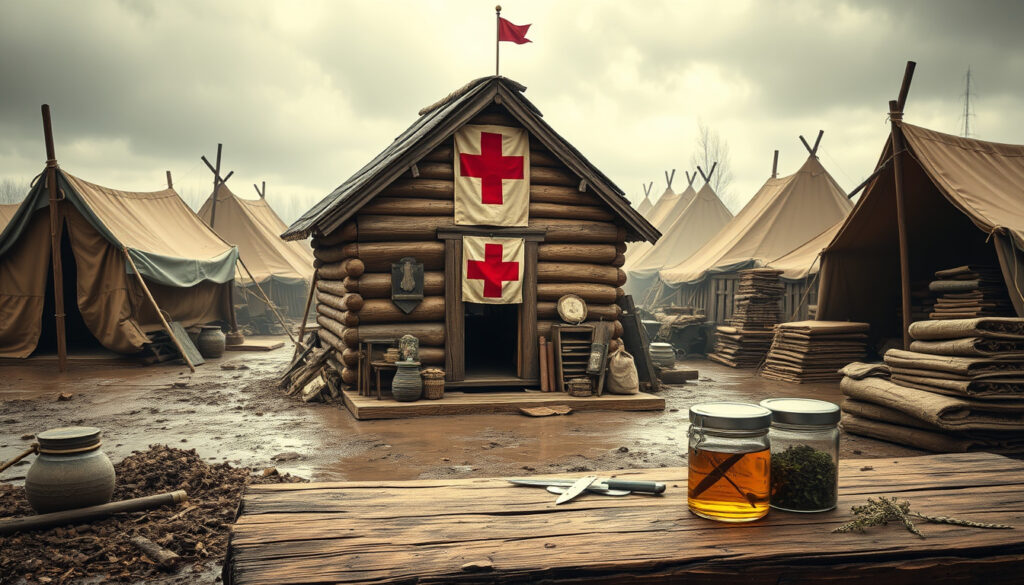
Mary Seacole: Crimean War Nurse and Her Lasting Legacy
Few figures from the 19th century embody resilience like Mary Seacole, a Jamaican-born nurse who defied Victorian prejudice to serve soldiers on the front lines of the Crimean War. While Florence Nightingale is often the first name people recall, Seacole’s story of entrepreneurial grit and battlefield courage is equally remarkable.
Born: 1805, Kingston, Jamaica ·
Known for: Nursing in the Crimean War ·
War service: Crimean War (1853–1856) ·
Nickname: “Mother Seacole”
Quick snapshot
- Born in Kingston, Jamaica in 1805 (BBC History)
- Arrived in Balaklava, Crimea in February 1855 (English Heritage)
- Opened the British Hotel near Balaclava in April 1855 (English Heritage)
- Published her autobiography in 1857 (BBC History)
- Exact number of patients she treated during the war
- Details of her early nursing training in Jamaica
- Whether she received a formal rejection from the War Office
- Financial status of the British Hotel after the war
- Exact timeline of her travels between Jamaica and Crimea
- 1805: Born in Kingston, Jamaica (BBC History)
- 1854: Travels to England, then to Crimea (English Heritage)
- 1855: Opens British Hotel near Balaclava (English Heritage)
- 1881: Dies in London (English Heritage)
- Ongoing work of the Mary Seacole Trust to promote diversity in healthcare
- Potential for new historical research into Seacole’s nursing methods
- Continued recognition through statues and educational programs
Six key facts, one picture: Seacole’s biography shows a woman who built her own path when institutions shut her out.
| Label | Value |
|---|---|
| Full name | Mary Jane Seacole |
| Born | 23 November 1805, Kingston, Jamaica (BBC History) |
| Died | 14 May 1881, London, England (English Heritage) |
| Known for | Nursing during the Crimean War |
| Major work | Wonderful Adventures of Mrs. Seacole in Many Lands (1857) (BBC History) |
| Burial | Kensal Green Cemetery, London (Mary Seacole Trust) |
What is Mary Seacole most famous for?
Early life and background
- Mary Seacole was born in Kingston, Jamaica, in 1805 to a Scottish soldier father and a Jamaican healer mother (BBC History).
- She learned nursing and herbal remedies from her mother, who ran a boarding house for invalid soldiers (London Museum).
Seacole’s nursing knowledge came from a tradition of Afro-Caribbean healing — a practical skill set that she later deployed on European battlefields with no formal Western training.
Role in the Crimean War
- After hearing of the war, Seacole traveled to England in late 1854 and applied to join Florence Nightingale’s nursing team, but was reportedly rebuffed (English Heritage).
- Undeterred, she funded her own passage to Crimea and arrived in Balaklava in February 1855 (English Heritage).
- By April 1855, she and her business partner Thomas Day had opened the British Hotel, a combined mess, store, and medical station near the front lines (English Heritage).
The British Hotel
- The British Hotel provided comfortable quarters for sick and convalescent officers and a supply of food and medicine (BBC History).
- Seacole often visited the battlefield to tend to wounded soldiers under fire, earning the nickname “Mother Seacole” (BBC History).
Her autobiography
- In 1857, Seacole published her autobiography, Wonderful Adventures of Mrs. Seacole in Many Lands, one of the earliest war memoirs written by a woman of color (BBC History).
- It became a bestseller and is still in print today.
The pattern: Seacole’s fame came from individual initiative, not institutional backing.
Did Florence Nightingale and Mary Seacole ever meet?
Accounts of the meeting
- Historical records indicate that Seacole visited Scutari in 1855 and met Nightingale there (English Heritage).
- Seacole described the encounter in her autobiography, noting that Nightingale declined her offer to work with her team.
Nightingale’s reception of Seacole
- Nightingale’s letters show she was cool toward Seacole, referring to her as a “hotel keeper” rather than a nurse (The Nightingale Society).
- Some historians suggest the rejection was due to Nightingale’s strict standards for her nurses and possibly racial prejudice.
Modern historical views
- Later scholarship has re-examined their relationship, noting that Seacole’s work complemented Nightingale’s rather than directly competing (London Museum).
- The BBC profile describes Seacole overcoming “a double prejudice” as a woman of mixed race in Victorian society (BBC History).
The implication: Nightingale’s rejection became a catalyst for Seacole’s independent path.
Why was Florence Nightingale more famous than Mary Seacole?
Institutional support and social status
- Nightingale came from a wealthy, well-connected English family and had government backing (The Nightingale Society).
- Seacole had no institutional support; she funded her Crimea journey entirely by herself (BBC History).
Post-war recognition
- Nightingale returned to Britain as a national hero, used her influence to write influential reports, and established the first secular school for nurses in 1860 (The Nightingale Society).
- Seacole returned to England destitute after the war, though a fund-raising event helped her recover financially.
19th-century racial and gender biases
- Victorian society was deeply racist and sexist, making it difficult for a woman of mixed race to receive the same recognition as a white woman from a prominent family (BBC History).
- As a result, Seacole’s contributions were downplayed or attributed to Nightingale’s team.
Modern re-evaluation
- Beginning in the late 20th century, historians and activists began to restore Seacole’s reputation (Mary Seacole Trust).
- In 2004 she was voted Greatest Black Briton in an online poll, and a statue was unveiled at St. Thomas’ Hospital in London in 2016.
The disparity in fame wasn’t about merit — it was about access. Nightingale had the system behind her; Seacole had only her own determination. The modern re-evaluation is correcting a century of historical bias.
The catch: Fame followed power, not merit.
What was Mary Seacole’s impact on nursing?
Nursing methods in the Crimean War
- Seacole combined Western medical practices with herbal remedies she learned from her mother, offering a holistic approach that was unconventional for the time (London Museum).
- She provided care under fire, which was rare for women in war zones.
Legacy in multicultural healthcare
- The Mary Seacole Trust works to promote diversity in the NHS and nursing professions (Mary Seacole Trust).
- She is increasingly considered a role model for black and minority ethnic healthcare workers.
Recognition by nursing organizations
- The Royal College of Nursing includes Seacole in its heritage materials, and there is an annual Mary Seacole Award for leadership in diversity.
- Her autobiography is studied in nursing history courses.
The pattern: From battlefield improvisation to institutional symbol, Seacole’s influence grew over time.
When did Mary Seacole pass away?
Circumstances of her death
- Mary Seacole died on 14 May 1881 in London, most likely of a stroke (English Heritage).
- Her death was noted in several British newspapers.
Burial and memorials
- She was buried in Kensal Green Cemetery, London (Mary Seacole Trust).
- Her grave was rededicated in 1973, and a blue plaque now marks her former home in London (English Heritage).
The implication: Even in death, Seacole’s legacy was slowly recognized.
Five areas of contrast highlight how Seacole and Nightingale differed in approach and legacy.
| Category | Mary Seacole | Florence Nightingale |
|---|---|---|
| Background | Jamaican, mixed race, healer family (BBC History) | English, wealthy, educated (Victorian Web) |
| War role | Self-funded hotel, battlefield nursing (English Heritage) | Government-appointed superintendent of nurses (The Nightingale Society) |
| Post-war influence | Modest; fund-raised for survival | Major; wrote Notes on Nursing, founded school (Victorian Web) |
| Institutional backing | None | War Office, British government |
| Modern legacy | Statue (2016), trust, diversity symbol (Mary Seacole Trust) | Nursing school, museum, international recognition |
The pattern: Seacole’s greatest achievements were born from self-reliance and improvisation, while Nightingale’s fame rested on institutional power and postwar reform. Both shaped modern nursing, but through radically different channels.
Timeline of Mary Seacole’s life
- : Mary Jane Seacole born in Kingston, Jamaica (BBC History)
- : Travels to England, then to Crimea (English Heritage)
- : Opens the British Hotel near Balaclava (English Heritage)
- : Returns to England after the war ends
- : Publishes autobiography (BBC History)
- : Dies in London; buried in Kensal Green Cemetery (English Heritage)
- : Voted Greatest Black Briton in a BBC online poll (Mary Seacole Trust)
- : Statue unveiled at St. Thomas’ Hospital, London (Mary Seacole Trust)
The timeline shows a woman who acted on her own initiative, often without institutional support.
What we know and what remains unclear
Confirmed facts
- Born 23 November 1805 in Jamaica (BBC History)
- Died 14 May 1881 in London (English Heritage)
- Served as a nurse in the Crimean War (London Museum)
- Published autobiography in 1857 (BBC History)
- Met Florence Nightingale in Scutari (English Heritage)
What remains unclear
- Exact number of patients she treated during the war
- Details of her early nursing training in Jamaica
- Whether she was formally rejected by the War Office or only by Nightingale’s team
- Financial status of the British Hotel after the war
- Exact timeline of her travels between Jamaica and Crimea
The gap between confirmed and unclear shows how much of Seacole’s story remains to be researched.
Quotes on Mary Seacole
“I have never been a slave… but I have been a slave to duty.”
— Mary Seacole, from her autobiography (BBC History)
“A kind and brave woman.”
— Review of her autobiography in The Times, 1857 (London Museum)
“She was a heroine of the Crimean War who overcame a double prejudice.”
— BBC History profile (BBC History)
“At the time, Mary Seacole was as well-known in Britain as Florence Nightingale.”
— Mary Seacole Trust (Mary Seacole Trust)
These quotes reflect the range of contemporary and modern views on Seacole’s character and legacy.
Seacole’s story is not just historical curiosity — it carries a practical consequence for today’s healthcare system. For the NHS and nursing organizations in the UK, the choice is clear: continue to let Seacole’s legacy be a footnote, or actively centre her example of inclusive, self-reliant care as a model for diversity initiatives. The growing number of statues, awards, and trust-backed programs suggests her moment has finally arrived.
For more on historical figures who shaped their eras, see the biography of Alexander Hamilton: Life, Duel, and Lasting Legacy and the profile of King Charles III: Biography, Health, and Family Dynamics.
en.wikipedia.org, harpenden-history.org.uk, wsna.org, historyheroes.co.uk, britainuntold.co.uk
Frequently asked questions
What was Mary Seacole’s nationality?
She was British Jamaican — born in Kingston, Jamaica, which was then a British colony.
Where is Mary Seacole’s statue located?
A statue of Mary Seacole was unveiled in 2016 at St. Thomas’ Hospital in London, near the Houses of Parliament.
Did Mary Seacole have any children?
No, she had no surviving children. She was married for a short time to a British soldier named Edwin Seacole, but he died soon after their marriage.
How did Mary Seacole fund her trip to Crimea?
She used her own savings from running a boarding house and hotel in Panama and Jamaica, and she also received some assistance from friends and business associates.
What is the Mary Seacole Trust?
The Mary Seacole Trust is a UK-based charity that works to promote diversity in healthcare and to educate the public about Seacole’s life and achievements (Mary Seacole Trust).
What awards has Mary Seacole received posthumously?
She was voted Greatest Black Briton in 2004, a statue was erected in her honor in 2016, and she is featured in the UK National Curriculum. The Royal College of Nursing gives an annual Mary Seacole Award for leadership in diversity.
More related posts
 Personal Allowance 2024/25: UK Tax-Free Threshold Explained
 iPhone 13 Pro Max Case – Best Protection and Style Picks
 AstraZeneca Share Price UK: AZN.L Live Price & Targets
 Angela White biography: Adult star, activist, academic
 Flea Bites: How to Identify, Treat, and Prevent Them
 Zack Snyder’s Justice League Guide: Differences & Runtime
 Julie Hogg: What Happened and How Her Mother Changed UK Law
 Tyler Robinson: What We Know and What Remains Unclear