How to Induce a Period: Natural Remedies & Safe Methods
If your period has been MIA for a few days—or longer than expected—the urge to nudge things along can feel urgent. Before you Google every home remedy imaginable, it’s worth knowing which approaches have science behind them and which ones are more folklore than fact. Here’s what the evidence actually says.
Average menstrual cycle length: 28 days · Common delay causes: Stress, weight changes · Natural methods evidence: Limited scientific support · Medical induction option: Hormonal birth control
Quick snapshot
- Hormonal birth control is the only reliable method for cycle timing (Medical News Today)
- Emmenagogues must be avoided during pregnancy—may induce abortion (Medical News Today)
- Herbal supplements are unregulated by the FDA (Medical News Today)
- Whether ginger actually induces uterine contractions in humans (Medical News Today)
- If one-hour period induction methods work at all (Liv Hospital)
- Whether sexual activity or orgasm reliably triggers menstruation (Bocah Indonesia)
- 2018: PMC study documented 87 plants used in Traditional Persian Medicine for menstrual induction (PMC – NIH)
- 2019: Studies on pineapple and ginger focused on dysmenorrhea pain, not induction (Medical News Today)
- Consult a healthcare provider if your period is more than 35 days late
- Medical evaluation can identify underlying conditions like PCOS or thyroid issues
- Hormonal therapy under supervision remains the evidence-backed path forward
The following table summarizes the key factors for anyone considering period induction options.
| Factor | Details |
|---|---|
| Safest method | Consult healthcare provider |
| Common herb | Ginger |
| Evidence level | Anecdotal for most natural methods |
| When to seek help | Over 35 days late |
| Hormonal induction | 21 active days + 7 placebo/withdrawal |
| First period onset | 12-13 years typical, 98% by age 15 per ACOG |
What can trigger a woman’s period?
Several factors influence whether your menstrual cycle speeds up or slows down. Understanding these triggers helps separate science from speculation.
Hormonal factors
The menstrual cycle is governed by a delicate orchestra of hormones—estrogen, progesterone, luteinizing hormone, and follicle-stimulating hormone. When this balance shifts, periods can arrive early, late, or not at all. Conditions like polycystic ovary syndrome (PCOS), thyroid disorders, and hyperprolactinemia directly impact hormonal regulation and may require medical intervention.
According to the Journal of Clinical Endocrinology & Metabolism, hormone therapy helps re-stabilize these levels to restore a normal cycle in individuals with endocrine disorders (Bocah Indonesia). The only reliable method for deliberately changing cycle timing is using hormonal birth control containing estrogen and progestin (Medical News Today).
Lifestyle triggers
Stress is one of the most common reasons for a delayed period. When cortisol levels rise, the hypothalamus—the brain’s hormone control center—can suppress the signals that trigger ovulation. The American Psychological Association links stress management to improved hormonal balance (Bocah Indonesia).
Significant weight changes—whether gain or loss—also affect menstrual timing. Extreme caloric restriction or intense athletic training can halt ovulation entirely, a condition known as functional hypothalamic amenorrhea. Diet, exercise, and stress reduction may help induce a period, but evidence remains largely anecdotal (Medical News Today).
Medical methods
Hormonal birth control allows inducing a period by stopping active pills early or skipping the placebo week entirely (Medical News Today). This approach triggers a withdrawal bleed, mimicking a natural period. However, it comes with trade-offs: hormonal contraceptives may increase blood clot, stroke, or heart attack risk in some individuals (Medical News Today).
Hormone therapy with progesterone, estrogen, bromocriptine, metformin, or clomiphene citrate may help regulate cycles under medical supervision (Bocah Indonesia). These options require a prescription and should be discussed with a healthcare provider.
How to trigger a period naturally?
The internet is flooded with natural remedies claiming to jumpstart your period. Here’s what the evidence actually supports—and what amounts to wishful thinking.
Herbal teas
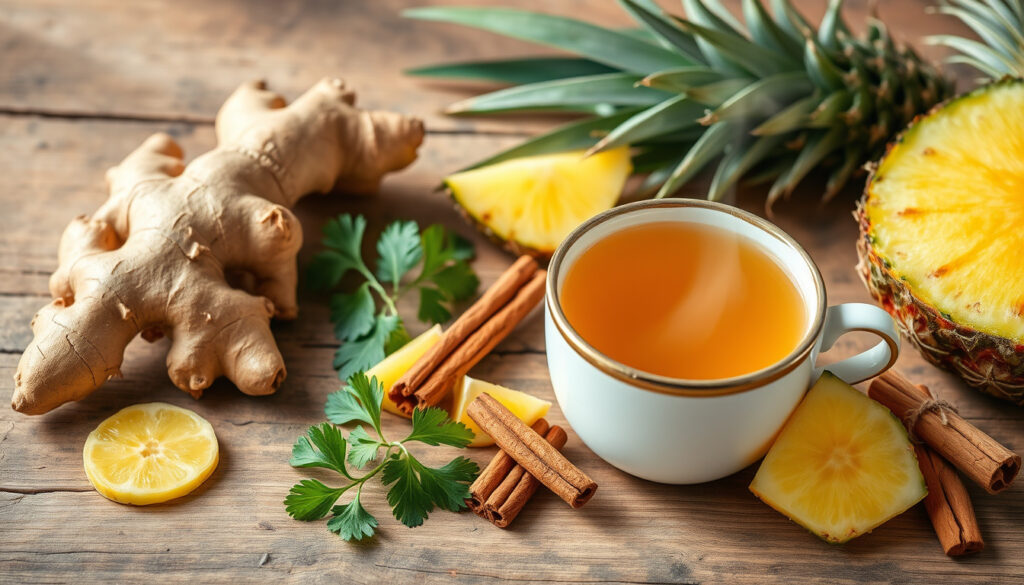
Parsley tea is one of the most commonly cited emmenagogues—a substance that stimulates menstrual flow. Dr. Thais Aliabadi, an OB-GYN, notes that mild emmenagogues like parsley, ginger, yarrow, rosemary, and sage teas have traditionally been used to stimulate uterine blood flow if you’re not pregnant (Dr. Aliabadi MD).
Ginger tea has a long traditional use for stimulating uterine contractions. Liv Hospital reports that ginger tea has been used traditionally for menstrual flow, though clinical research remains limited (Liv Hospital). Fennel (Foeniculum vulgare), however, has stronger scientific backing—PMC research confirms it is effective for inducing menstruation post-medroxyprogesterone, with estrogenic properties (PMC – NIH).
Traditional Persian Medicine identified 87 medicinal plants used for oligomenorrhea and amenorrhea, but clinical validation for most remains sparse (PMC – NIH).
Diet adjustments
Vitamin C-rich foods like pineapple and citrus are popularly believed to induce periods by increasing estrogen levels. However, Liv Hospital notes that evidence for this mechanism is weak (Liv Hospital). Medical News Today is more definitive: no scientific evidence supports pineapple, fenugreek, or vitamin C for inducing periods (Medical News Today).
Cinnamon has traditionally been used to regulate menstrual cycles especially in PCOS patients (Liv Hospital). Papaya’s carotene may stimulate estrogen naturally, though this claim also lacks robust clinical validation (Liv Hospital).
Heat application
Applying a warm compress or heating pad to the lower abdomen is a time-honored approach. Heat relaxes uterine muscles and increases pelvic blood flow, potentially encouraging the shedding of the endometrial lining. While this method lacks extensive clinical trials, it carries no known risks when used at safe temperatures.
Emmenagogue herbs like chamomile, parsley, cinnamon, rosemary, sage, and oregano are used traditionally but lack scientific backing (Medical News Today). Pregnant individuals must avoid these entirely—they may induce abortion (Medical News Today).
What can I drink to make my period start?
Beverages are often the first line of attack when trying to trigger a period. Here’s a breakdown of the most popular options.
Ginger options
Ginger tea remains the most frequently recommended natural drink for period induction. As noted, Liv Hospital acknowledges its traditional use for stimulating uterine contractions (Liv Hospital). MiraCare lists ginger among herbs that support menstrual health, alongside angelica sinensis, fennel, and rue (MiraCare).
To prepare ginger tea: steep 1-2 teaspoons of fresh grated ginger in hot water for 5-10 minutes. Some people add honey for taste. Consuming 2-3 cups daily is a common recommendation, though excessive intake may cause digestive upset.
Parsley preparations
Parsley tea acts as an emmenagogue, though Liv Hospital advises using it in moderation due to strong effects (Liv Hospital). To make parsley tea, steep a handful of fresh parsley leaves in boiling water for 5-10 minutes.
Other beverages
Turmeric milk, cinnamon water, and papaya juice are also commonly suggested. However, Medical News Today states there is no scientific evidence that these methods work (Medical News Today).
Herbal teas are generally safe to try if you’re not pregnant and your delay isn’t prolonged. However, they shouldn’t replace medical evaluation if your cycles are consistently irregular.
Where to press to induce a period?
Acupressure and massage techniques target specific body points believed to influence menstrual flow.
Acupressure points
Traditional Chinese Medicine identifies several pressure points allegedly linked to menstrual regulation. The spleen 6 point (located above the inner ankle bone) is commonly recommended. The liver 3 point (on the top of the foot) is another frequently cited location. However, these claims derive from traditional practice rather than Western clinical research.
Massage methods
Bocah Indonesia reports that abdominal massage may increase pelvic circulation to relax uterine muscles (Bocah Indonesia), though this claim has low confidence due to limited supporting evidence.
Lower abdomen focus
Gentle circular massage of the lower abdomen, performed daily for 10-15 minutes, is believed to encourage blood flow to the reproductive organs. This approach is low-risk and may complement other methods.
While acupressure and massage lack robust clinical validation, they carry minimal risk and may support overall pelvic health when performed gently.
The implication: These traditional techniques may offer some benefit for pelvic circulation, but they should not replace evidence-based medical approaches for cycle regulation.
How to get periods immediately in one hour?
The desire for instant results is understandable, but the reality is far more complicated.
Immediate exercises
Intense exercise followed by relaxation is sometimes promoted as a method to trigger quick onset. The theory suggests that elevating heart rate and then releasing tension may encourage blood flow changes. However, Liv Hospital acknowledges that one-hour effectiveness claims lack scientific substantiation (Liv Hospital).
Quick heat therapy
Applying a heating pad immediately upon waking or throughout the day may help relax uterine muscles and encourage endometrial shedding. While this won’t produce results within an hour, consistent application over several hours is more realistic.
Risks of rapid induction
TopLine MD warns that attempting rapid period induction carries risks, particularly with high vitamin C doses or intense exercise routines. Exercise and diet changes like fasting may risk dehydration, nutrient loss, and constipation (TopLine MD).
High vitamin C doses for induction carry risks if not dosed correctly (TopLine MD). Overconsumption can lead to stomach upset, kidney stones, and other complications.
No methods can reliably induce a period within one hour. Setting unrealistic expectations may lead to disappointment and potentially harmful overconsumption of supplements or herbs.
The implication: The menstrual cycle operates on its own timeline. Forcing rapid changes risks your health and rarely delivers promised results. Patience and medical consultation remain the most reliable paths.
Steps to try natural methods safely
-
Step 1: Rule out pregnancy. Before trying any induction method, take a pregnancy test. Many natural remedies are contraindicated during pregnancy.
-
Step 2: Assess your cycle history. If your period is only a few days late, wait a bit longer. Stress, travel, and minor illness can cause brief delays that resolve naturally.
-
Step 3: Try gentle lifestyle adjustments. Prioritize stress reduction through yoga, meditation, or adequate sleep. Maintain a balanced diet and moderate exercise routine.
-
Step 4: Use herbal support cautiously. If you choose herbal teas like ginger or parsley, prepare them mildly and consume in moderation. Avoid if pregnant or trying to conceive.
-
Step 5: Apply heat therapy. Use a heating pad on your lower abdomen for 15-20 minutes several times daily. This relaxes muscles without pharmaceutical side effects.
-
Step 6: Seek medical evaluation if delayed beyond 35 days. A healthcare provider can identify underlying conditions and discuss hormonal options safely.
Confirmed facts
- Hormonal contraception induces withdrawal bleed reliably
- Heat application relaxes uterine muscles
- Stress management via yoga and meditation improves hormonal balance
- Pregnant individuals must avoid emmenagogues—may induce abortion
- Herbal supplements are unregulated by the FDA
- Fennel shows efficacy in peer-reviewed research for post-medroxyprogesterone induction
What’s unclear or anecdotal
- Whether ginger induces human uterine contractions
- If one-hour period induction methods work at all
- Whether sexual activity or orgasm reliably triggers menstruation
- Vitamin C’s role in period induction
- Pineapple bromelain’s hormonal effects
- Abdominal massage efficacy for cycle regulation
What experts say
“The only reliable method for changing a menstrual cycle is by using hormonal birth control.”
— Medical News Today (Health Publication)
“There is no scientific evidence that these methods work.”
— Medical News Today (regarding natural remedies)
“87 medicinal plants were found to be potent and frequent in treating oligomenorrhea and amenorrhea.”
— PMC – NIH (Scientific Journal)
“Stress management via yoga, meditation, and sleep improves hormonal balance and may promote regular cycles.”
— Bocah Indonesia (Health Site)
Related reading: first menstrual period
Prolonged delays in menstruation may signal perimenopause, where understanding typical menopause stages and duration helps guide when to seek professional advice.
Frequently asked questions
Is it safe to induce a period at home?
Mild natural methods like herbal teas and heat application are generally safe for non-pregnant individuals. However, hormonal birth control and stronger herbal interventions should only be used under medical supervision. If your delay exceeds 35 days, consult a healthcare provider.
Can exercise really bring on your period?
Regular, moderate exercise supports hormonal balance and may help regulate cycles over time. However, evidence for exercise triggering immediate onset is anecdotal. Intense exercise without adequate nutrition can actually delay periods by disrupting hormonal signals.
What if my period is delayed by stress?
Stress-related delays often resolve once cortisol levels normalize. Prioritize sleep (7-9 hours nightly), mindfulness practices, and activities that lower stress. If stress-related delays persist, a healthcare provider can help rule out other conditions.
Are there foods that delay periods?
Processed foods, excessive caffeine, and foods high in sugar may contribute to hormonal imbalances that affect cycle regularity. A balanced diet rich in whole grains, lean proteins, healthy fats, and vegetables supports menstrual health.
When should I see a doctor for a delayed period?
See a doctor if your period is more than 35 days late, if you experience severe pain, unusually heavy bleeding, or if missed periods persist for three or more cycles. Medical evaluation can identify underlying conditions like PCOS, thyroid disorders, or early menopause.
Does orgasm induce menstruation?
Some sources suggest sexual activity or orgasm may trigger uterine contractions potentially aiding period induction. However, according to Bocah Indonesia, the evidence for this claim is low confidence and not well-established in clinical literature.
What are the risks of herbal induction?
Risks include uterine contractions that may cause cramping or bleeding, potential abortion if pregnant, interactions with medications, and unregulated supplement quality. The FDA does not regulate herbal supplements, so product purity varies significantly between manufacturers.
For people experiencing irregular cycles, the path forward is clear: prioritize evidence-based approaches like stress reduction and balanced nutrition, consider medical consultation when delays extend beyond 35 days, and approach viral home remedies with healthy skepticism. The menstrual cycle responds best to holistic care, not quick fixes.
For readers seeking to induce their period, the most reliable path involves consulting a healthcare provider who can identify underlying conditions and recommend evidence-based treatments. Those who rely solely on unproven natural remedies risk continued delay and potential health complications.
More related posts
 Newspaper – Definition, History, Types and Formats
 Santander Business Online Banking – Login Register App Guide
 Dog Stung by Bee: First Aid Steps & Emergency Signs
 National Sea Life Centre Birmingham Tickets: Prices & Booking
 Personal Allowance 2024/25: UK Tax-Free Threshold Explained
 Used Tesla Model 3 – UK Prices, Specs and Reviews 2024
 Ladies Coats in Ireland: Top Brands, Sales & Where to Buy