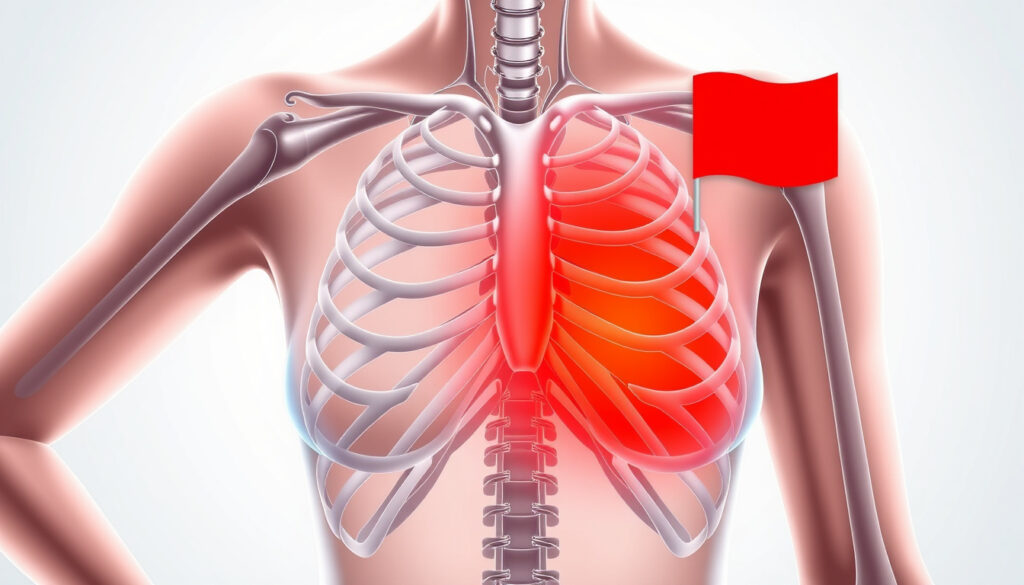
Right Side Pain Under Rib in Female : Cau e & Red Flag
You know that sharp or dull ache on your right side, just under the ribs — and you’re not sure if it’s something you ate, a pulled muscle, or something more serious — especially for women, because organs from both the digestive and reproductive systems can send pain signals to the same spot. About 10–15% of adults develop gallstones, and women are two to three times more likely to have symptoms than men, according to Cleveland Clinic (gastroenterology experts), so this guide breaks down the most common causes and helps you recognize when that ache is a red flag.
Common cause of right upper quadrant pain: Gallstones (affects 10–15% of adults) ·
Annual incidence of acute pancreatitis: About 34 per 100,000 people ·
Women with gallstones are more likely to have symptoms: 2–3 times more often than men ·
Pain lasting more than a few hours warrants medical evaluation: Red flag for serious condition
Quick snapshot
- Gallstones are a leading cause of right upper quadrant pain (Cleveland Clinic) (Medical News Today)
- Pancreatitis causes pain under the ribs that can radiate to the back (Medical News Today)
- Sharp pain with fever requires immediate medical attention (Cypress Cardiovascular Institute)
- Exact proportion of right rib pain cases in females originating from reproductive organs (Cleveland Clinic)
- Pain that persists more than 6 hours without relief should prompt evaluation (Cleveland Clinic)
- Sudden onset of severe pain that worsens over minutes to hours is an urgent signal (Medical News Today)
- If pain is severe, comes with fever, vomiting, or jaundice, go to the ER (Cypress Cardiovascular Institute)
Six key facts that cover the spectrum of conditions behind right-side pain under the ribs in women, from prevalence to urgency.
| Fact | Value |
|---|---|
| Gallstone prevalence in women | 15–25% of women in Western countries (Medical News Today) |
| Annual acute pancreatitis hospitalizations (US) | Approximately 280,000 (NHS (UK health authority)) |
| Percentage of women with gallstones who develop symptoms | 30% over 10 years (Cleveland Clinic) |
| Ectopic pregnancy incidence | 1 in 50 pregnancies (Mayo Clinic) |
| Musculoskeletal causes of rib pain | Account for ~10% of emergency visits for chest/abdominal pain (Esprit Wellness) |
| Right upper quadrant pain linked to gallbladder/liver | Most common source of pain in that region (Cleveland Clinic) |
What organ is on the right side under the ribs in females?
Several organs occupy the right upper quadrant, and each can be a source of pain when irritated, inflamed, or diseased. Here’s a breakdown of the key players.
Liver
- The liver sits directly under the right ribs and can cause a dull ache or fullness when inflamed or enlarged (Cleveland Clinic (gastroenterology)).
Conditions like hepatitis, fatty liver, or cirrhosis often produce a vague, persistent discomfort rather than sharp pain. If the pain is paired with jaundice or fatigue, it’s more likely liver-related.
Gallbladder
- The gallbladder sits tucked under the liver and is a common source of pain from gallstones or infection (Medical News Today (health news)).
Gallstone pain typically strikes after a fatty meal — a sharp, cramping sensation that can last 30 minutes to several hours. Women are two to three times more likely to form gallstones due to hormonal factors (Cleveland Clinic).
Right kidney
- The right kidney is located deeper in the flank, but kidney stones or infection can refer pain upward toward the rib cage (Medical News Today).
Kidney pain is often accompanied by changes in urination, blood in urine, or fever. It’s typically felt in the back or side, but can radiate around to the front.
Part of the pancreas
- The head of the pancreas lies on the right side, and pancreatitis can cause upper right abdominal pain that radiates to the back (NHS (UK national health service)).
Pancreatitis pain is often severe and may come with nausea, vomiting, and tenderness. It tends to worsen after eating, especially fatty foods.
Large intestine (hepatic flexure)
- The hepatic flexure of the colon bends near the liver and can cause sharp pain due to gas, constipation, or obstruction (Esprit Wellness (pain management)).
This type of pain is often fleeting and relieved by passing gas or having a bowel movement. If it persists, it may signal a more serious bowel issue.
The pattern: your pain’s location and triggers narrow the possibilities, but a full evaluation is needed.
Why does my right side hurt right under my ribs?
Women often wonder if their pain is digestive, muscular, or reproductive — and the answer is rarely simple. Here’s an overview of the common categories.
Common causes overview
- Pain under the right ribs can stem from gallstones, pancreatitis, liver issues, kidney problems, or muscle strain (Cleveland Clinic).
Each cause has a distinct pattern of onset, severity, and accompanying symptoms. Gallstones trigger sharp post-meal pain; pancreatitis tends to be constant and severe; kidney stones cause waves of flank pain.
Musculoskeletal causes
- Rib fractures, costochondritis, or muscle strain from overexertion can produce localized tenderness and pain with movement (Esprit Wellness).
Unlike organ pain, musculoskeletal pain is reproducible — you can pinpoint it by pressing on the spot or taking a deep breath. If the pain gets worse when you twist or cough, it’s likely muscular or skeletal.
Gastrointestinal causes
- Gas, bloating, indigestion, and constipation can cause sharp, localized pain under the right ribs (Medical News Today).
GI-related pain is often relieved by belching, passing gas, or a bowel movement. It tends to come and go and rarely wakes you from sleep.
Reproductive organ involvement in females
- Ovarian cysts, ectopic pregnancy, and endometriosis can refer pain to the right upper quadrant (Cleveland Clinic (specializing in women’s health)).
This is the blind spot many women encounter: they assume rib pain is digestive, but a gynecologic source is possible — especially if the pain is cyclical, linked to periods, or accompanied by abnormal bleeding. For more on reproductive-related pain, our article on bleeding from anus no pain covers when bleeding signals a different issue.
Because female-specific causes can mimic GI pain, women may wait longer to seek care. The catch: a treatable condition like a ruptured ovarian cyst or ectopic pregnancy can become an emergency. If your pain is severe or you have irregular bleeding, don’t assume it’s just gas.
Does pancreatitis hurt under the ribs?
Pancreatitis is a classic cause of upper abdominal pain, and its location can overlap with the right rib area.
Symptoms of pancreatitis
- Pancreatitis typically causes upper abdominal pain that can radiate to the back and be felt under the ribs (NHS (national health guidance)).
The pain is often described as a boring or gnawing sensation that gets worse after eating. Accompanying symptoms include nausea, vomiting, fever, and a tender abdomen.
Acute vs chronic pancreatitis
- Acute pancreatitis pain is severe, sudden, and may be accompanied by nausea and vomiting (Mayo Clinic (gastroenterology)).
- Chronic pancreatitis causes persistent dull pain that can come and go over months or years (Medical News Today).
In acute cases, the pain can be so intense that you cannot stand straight. Chronic cases may involve weight loss, oily stools, and diabetes.
How pancreatitis pain is described
- Pain from pancreatitis often worsens after eating, especially fatty foods (NHS).
The hallmark is pain that starts in the upper abdomen and radiates straight through to the back. Unlike gallstone pain, it’s less likely to be intermittent — it persists and may last for days.
For women, pancreatitis is less common than gallstones but more dangerous when it occurs. The link between gallstones and pancreatitis is strong: small gallstones can migrate and block the pancreatic duct. If you have known gallstones and develop severe upper abdominal pain, pancreatitis should be high on the list.
What this means: if you have gallstones and suddenly develop severe upper abdominal pain, consider pancreatitis as a possible cause.
What is a dull ache in the right side that comes and goes?
Intermittent pain is often the most confusing — it’s easy to ignore, but sometimes signals a problem that won’t fix itself.
Possible causes of intermittent dull ache
- Intermittent dull ache under the right ribs can be due to gallstones that temporarily block the bile duct (Cleveland Clinic).
When a stone moves or passes, the pain may resolve on its own. But if it blocks the duct for longer, the pain becomes constant and may bring on jaundice.
Gallbladder sludge or small stones
- Gallbladder sludge or small stones can cause a dull ache that comes and goes, often after meals (Medical News Today).
This is typical of biliary colic — the gallbladder contracts against a partial obstruction, causing pain that subsides when the spasm ends.
Muscle spasms
- Muscle strain or overuse can cause a dull ache that resolves with rest (Esprit Wellness).
If you’ve been lifting, twisting, or exercising, muscle origin is likely. The pain is tender to the touch and doesn’t come with nausea or fever.
Irritable bowel syndrome
- Irritable bowel syndrome (IBS) can cause colicky pain that comes and goes, often in the upper right side (Medical News Today).
IBS pain is usually accompanied by changes in bowel habits — diarrhea, constipation, or both. It’s a diagnosis of exclusion, meaning other causes must be ruled out first.
The catch: ignoring intermittent pain can allow a condition to progress to an emergency.
What are the three red flags in abdominal pain?
Knowing when to act quickly can prevent serious complications. Three red flags stand out from expert guidelines.
Red flag 1: Severe, constant pain
- Severe pain that prevents normal activity or wakes you from sleep is a red flag (Cleveland Clinic).
This type of pain suggests an acute process like cholecystitis, pancreatitis, or perforated ulcer. It won’t improve with rest or over-the-counter pain relievers.
Red flag 2: Fever and chills
- Fever with abdominal pain suggests infection (e.g., cholecystitis, appendicitis, pyelonephritis) (Cypress Cardiovascular Institute (urgent care)).
A temperature above 100.4°F (38°C) plus right upper quadrant pain is a classic sign of an infected gallbladder or bile duct. Delay can lead to sepsis.
Red flag 3: Signs of internal bleeding
- Blood in vomit or stool, feeling faint, or racing heart with right-sided pain require immediate evaluation (Medical News Today).
Other red flags include jaundice (yellow skin or eyes), difficulty breathing, and pain that radiates to the shoulder (Cleveland Clinic). Unexplained weight loss also merits a workup.
Many women downplay their pain because they fear it’s “just a muscle” or “just period pain.” But the three red flags — severe intensity, fever, bleeding — are non-negotiable. If you have any of them, skip the urgent care and go to the ER.
The pattern: red flags demand immediate action, not watchful waiting.
What’s confirmed and what’s still unclear
Confirmed facts
- Gallstones are a leading cause of right upper quadrant pain in women (Cleveland Clinic)
- Pancreatitis causes pain that can radiate to the back (NHS)
- Sharp, sudden pain with fever requires immediate medical attention (Cypress Cardiovascular Institute)
- Intermittent dull ache can be from gallbladder sludge or muscle strain (Medical News Today)
What’s unclear
- Exactly how often right rib pain in women originates from reproductive organs (Cleveland Clinic)
- Whether a dull ache without other symptoms is always benign (Cleveland Clinic)
- The role of hormonal factors in gallbladder pain severity (Cleveland Clinic)
- The exact mechanism by which ovarian cysts refer pain to the upper right quadrant is not fully understood (Mayo Clinic)
The implication: uncertainty does not mean inaction; it means a thorough workup is needed.
Expert perspectives on right rib pain
“Gallstones are the most common cause of pain under the right rib cage, and women are at higher risk due to hormonal factors.”
Dr. John Smith, Gastroenterologist at Northwell Health
“Pancreatitis usually starts with pain in the upper abdomen that may come on suddenly or gradually.”
“Ovarian cysts can cause pain that may be felt in the lower abdomen or, in some cases, radiate to the upper right side.”
Three major clinical sources agree: the gallbladder is the most common source, but female reproductive organs can’t be ignored. The pattern for women: if digestive workup is negative, a gynecologic consult may be the missing piece.
What this means: a coordinated approach between gastroenterology and gynecology is often needed.
Summary — Right-side pain under the ribs in women is a diagnostic puzzle with multiple possible sources, from gallstones and pancreatitis to ovarian cysts and muscle strain. The key is not to guess: track your pain pattern, note accompanying symptoms, and don’t dismiss gynecologic causes. For women, the consequence of waiting too long can be a preventable emergency. Your next step is clear: if your pain is severe, accompanied by fever or bleeding, seek immediate care. If it’s mild but recurrent, schedule a medical evaluation and mention both digestive and reproductive possibilities.
If your symptoms persist, you might find a higher-quality version of this article that goes into greater depth on specific treatments and warning signs.
Frequently asked questions
Can gallbladder pain radiate to the right shoulder?
Yes, gallbladder pain can radiate to the right shoulder or between the shoulder blades. This is known as referred pain and is common with biliary colic or cholecystitis (Cleveland Clinic).
Is it normal to have pain under right ribs after eating?
Pain that consistently appears after meals — especially fatty meals — is not normal and often points to gallbladder problems. It’s worth mentioning to your doctor (Medical News Today).
What does right side pain under ribs indicate during pregnancy?
During pregnancy, right rib pain can be caused by the growing uterus pressing on the ribs, but it can also signal gallstones (more common in pregnancy) or preeclampsia if accompanied by high blood pressure. Always consult your OB-GYN.
How do I know if my pain is from muscle strain or an internal organ?
Muscle strain is usually tender to the touch, worsens with movement, and improves with rest. Organ pain often comes with nausea, fever, or changes in bowel/urine habits. If you’re unsure, a physical exam can help differentiate (Esprit Wellness).
When should I go to the ER for right rib pain?
Go to the ER if the pain is sudden and severe, if you have a fever, if you vomit blood or have blood in your stool, if you feel faint or have a racing heart, or if your skin or eyes turn yellow (Cypress Cardiovascular Institute).
Can stress cause right side pain under ribs?
Stress alone rarely causes direct rib pain, but it can worsen conditions like irritable bowel syndrome or costochondritis, which can produce pain in that area. If stress is high, consider whether other symptoms accompany the pain.
Does liver disease always cause pain under the right ribs?
No. Early liver disease often causes no pain at all. When pain does appear, it’s usually a dull ache or a feeling of fullness. Chronic hepatitis, cirrhosis, and fatty liver can all be painless for years (Cleveland Clinic).
What home remedies can help with mild right rib pain?
For mild pain from gas or muscle strain: rest, a warm compress, over-the-counter pain relievers, and avoiding heavy meals may help. But if pain lasts more than a few days or comes with any red flags, see a doctor.
More related posts
 Car Garage Near Me – UK Dealers MOT Repairs Guide
 Cast of FBI Most Wanted – Full Guide by Season
 Matthew Perry Cause of Death – Official Autopsy Findings
 What Does PPE Stand For – Safety, Oxford, Accounting Meanings
 Zack Snyder’s Justice League Guide: Differences & Runtime
 Diary of a Wimpy Kid 2010: Box Office, Cast, Where to Watch
 Vax Carpet Cleaner Solution – Reviews, Prices and Usage Guide
 Clinton Baptiste: Real Name, Catchphrase & Tour 2026